
Reading guide · Parents of a K-1 child
Decodable books: do they help new readers?
Yes, as early practice. A decodable book uses only the letter sounds and common words a child knows. It helps accuracy right away; a lasting edge is not shown.
21 sources · Every fact checked against its source
Watch the answer
Read the video transcript
A decodable book comes home from school. What is it, and does it help a new reader?
It uses only the letter sounds and common words your child has been taught. So your child can read every word.
Yes, as early practice. A 2012 review found they get children sounding words out, and reading them more accurately, right away.
Books that repeat one line let a child guess the word from the picture. A U.S. Department of Education guide warns against guessing.
But research has not shown a lasting edge. In a 2004 study, the two kinds of books gave tutored first graders the same results.
One researcher compares decodable books to training wheels on a bicycle. They are a short stage.
So have your child read the first page. Five or more stumbles? Too hard for now. And keep reading richer books aloud.
Then when a decodable book comes home, you'll know what it's for.
The 30-second answer
8 cards. Tap the arrow for the next one.
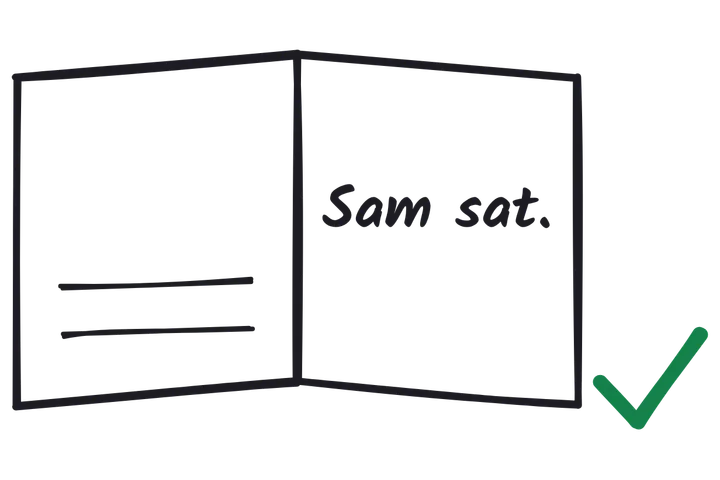
The short answer
Yes, as early practice. They get a new reader sounding words out and reading them right. Research has not shown a lasting edge.
What is a decodable book?
A book your child can sound out. It uses only the letter sounds and common words your child has been taught.
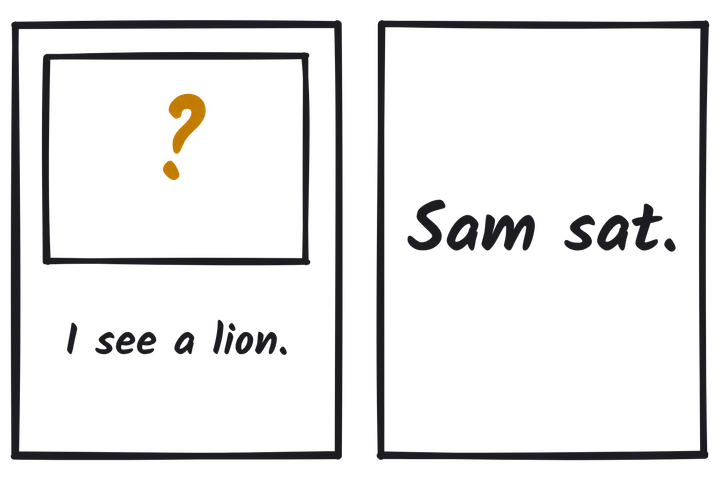
Decodable vs leveled readers
A book that repeats one line lets a child guess the word from the picture. A decodable book makes the child sound it out.
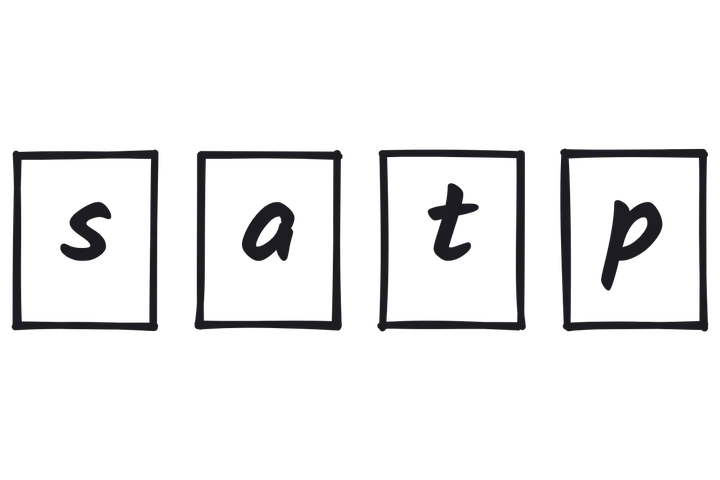
Decodable for which child?
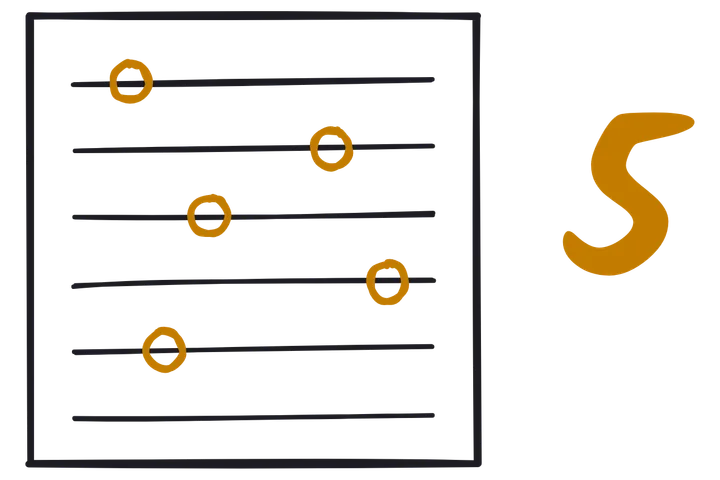
It depends on what that child has been taught. With just s, a, t and p, a child can already read five words.
Is this book too hard?
Do the first-page check. Five or more stumbles means too hard for now. Read that book to your child instead.
Is there a lasting edge?
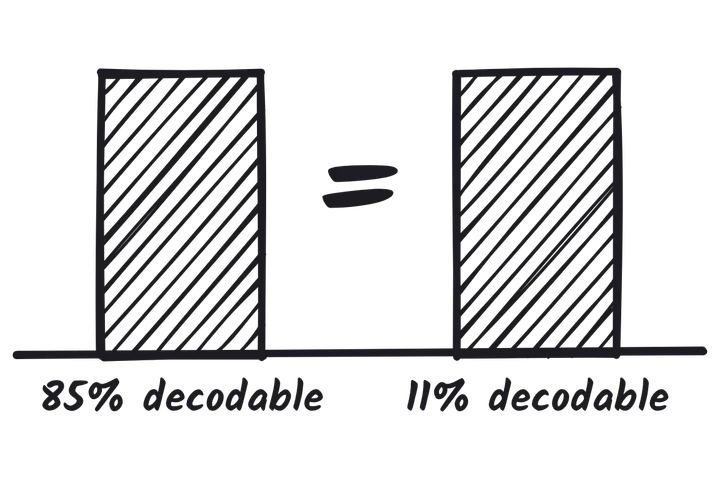
Not shown. In a 2004 study, tutored first graders who read mostly decodable books and those who read few did not differ on any test.
How long do kids need them?
A short stage, like training wheels. Keep reading richer books aloud the whole time.
What to do this week
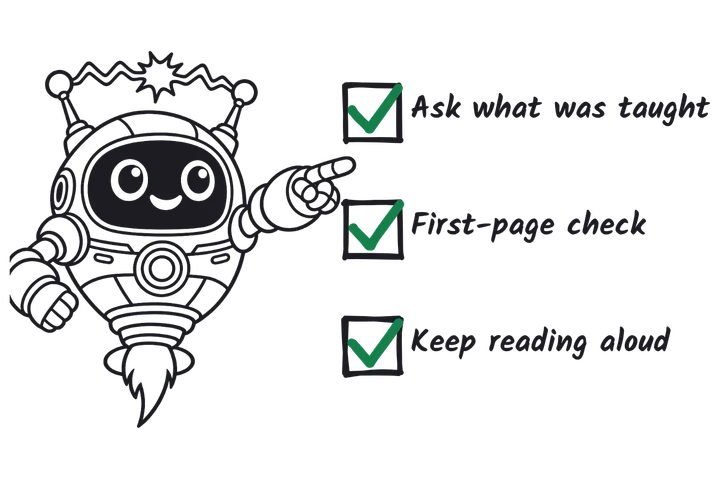
Ask which letter sounds have been taught. Pick books inside that list. Do the first-page check. Keep reading aloud.
What are decodable books?
A decodable book is a book a new reader can sound out. The U.S. Department of Education has a guide for teaching reading in kindergarten to third grade. It calls decodable text "text that is written so that students can read it using the letter sounds and high-frequency sight words they have learned."
Here is why that matters. A child who is just starting knows only a few letter sounds. Most books on the shelf are full of words that child cannot sound out yet. A decodable book fixes that. It uses the sounds the child knows, plus a few common words the child has been taught. So the child can read the whole page. And reading it is real practice.
No book is decodable for every child. A book is decodable for your child if it uses the sounds your child has been taught. The same book can be just right for one six-year-old and too hard for the next.
Do decodable books work? What the research says
The case for phonics is strong. The case for decodable books is good, but smaller.
What supports them. In 2012 two researchers went through the studies. Their names are Jennifer Cheatham and Jill Allor. They found that decodable text "increases the likelihood that students will use a decoding strategy and results in immediate benefits, particularly with regard to accuracy." That is a real gain, and it shows up fast. The federal guide lists short decodable texts as one way to practice new letter sounds. That step is part of advice it rates as strong.
What is not proven. A lasting edge has not been shown. A 2004 study tutored first graders who were behind. All of them got the same phonics lessons. In the first 30 lessons, one group's books were 85% decodable. The other group's were 11%. The two groups, the study says, "did not differ on any posttest." Both groups had a tutor beside them the whole time.
No best percentage. Nobody has shown that a book must be 90% decodable, or 75%. Timothy Shanahan is a reading researcher. He served on the National Reading Panel. He told Education Week there is no "magic level".
Not the only books. The 2012 review asked for books that pass more than one test. Being easy to sound out is "one key characteristic". It is not the only one. The federal guide says children should meet "texts of varied levels, diverse genres, and wide-ranging content."
How to choose a decodable book
- Ask what has been taught. Ask the teacher which letter sounds the class has covered. Then choose books that stay inside that list.
- Do the first-page check. Ask your child to read the first page aloud. Count the stumbles: words your child cannot read or gets wrong. Five or more? Too hard for now. In the words of Mississippi's read-at-home plan, "you can read that book to them until it is in their independent reading range!"
- Aim for 95%. The same plan says: "Children should be able to read at least 95% of the words in a text correctly. If they can't, the text is too hard for them to read independently." Reading with you beside them, a book can be a little harder: the federal guide allows up to one missed word in ten.
- Keep reading aloud. Decodable books are for your child's own practice.
Not sure a book fits? Paste a page into the free Phonics Book Checker. It lists the sound-spellings the text needs.
Know a parent or teacher who is asking about this?
Go deeper
The background, section by section. Tap a section to open it.
1Decodable books vs leveled readers: what is the difference?
Many early books are not decodable. They are often called leveled readers or predictable books. Each page repeats one sentence and swaps the last word. The picture gives that word away. "I see a giraffe." "I see a lion."
A child can get through a book like that without reading it. The child learns the pattern, looks at the picture and says the word. This way of teaching has a name: three-cueing. The child is taught to work a word out from the story, the sentence and the look of the word. Sounding it out comes last.
The federal guide warns against it. Its panel "discourages teachers from allowing students to use guessing strategies". It says that leaning on the pictures is "a habit that will not be effective with more-difficult texts and may become difficult to break."
| Guess-the-picture book | Decodable book | |
|---|---|---|
| The words | Picked to fit the pattern and the picture. | Picked from the sounds your child has been taught. |
| What your child does | Looks at the picture and guesses. | Looks at the letters and sounds the word out. |
| Cover the picture | The reading falls apart. | The reading still works. |
| What it builds | A guessing habit. | A sounding-out habit. |
Some states now ban three-cueing in schools. Ohio law bars reading materials that use it from pre-kindergarten to fifth grade. Alabama passed a ban in 2026. News counts put the total at more than a dozen states by spring 2025. No official count exists.
Pictures are still good. They help a child follow the story and enjoy it. The trouble starts only when the picture is used to name the word.
2Free decodable books: seven sets you can use today
We checked each set below on its maker's own website on November 13, 2026. All seven are free. None of the pages we opened asked us to sign up. Each set follows its own order of sounds. So check the first books against what your child has been taught.
| Set | Who makes it | What you get | Starts with |
|---|---|---|---|
| UFLI Foundations decodable passages | University of Florida Literacy Institute | A one-page passage to print for each lesson, from lesson 8 on. | a, m, s, t, p, f, i |
| SPELD SA phonic books | SPELD SA, a nonprofit in South Australia | Short books to print or read on screen. Australian spelling. | s, a, t, i, p, n |
| Reading Universe decodable texts | Reading Universe (WETA, Barksdale Reading Institute, First Book) | More than 95 texts to print, sorted by phonics skill. | Short vowels |
| Core Knowledge Skills readers | Core Knowledge Foundation | A reader to download for each unit of its school program. We opened a first-grade one. | Its own unit order |
| TextProject DecodableReads | TextProject | Short photo stories to print, in three sets. | Common vowel patterns |
| Starfall Learn to Read | Starfall Education Foundation | Fifteen on-screen books with games. Starfall sells a membership for its other content. | Short-vowel words |
| Open Source Phonics stories | Open Source Phonics | Text-only stories to print. Written with older children in mind. | Short syllables |
Two more sets ask for an email address first. Half-Pint Readers lets you read its whole library online. Reach All Readers sends about half of each of its sets.
3What does "decodable for my child" mean?
A child does not need many letters to start. England's national phonics guidance lists five words a child can read with just four letters: s, a, t and p. Add four more letters and we count 36 words on its practice list.
Real programs work the same way. UFLI Foundations is a phonics program from the University of Florida. Its first decodable passage comes at lesson 8. By then the lessons have taught a, m, s, t, p, f and i.
4When should my child move on from decodable books?
There is no set date. Education Week reports that researchers see decodable text as a tool for "a short window, when students are first learning to sound out words." Heidi Anne Mesmer, a reading researcher, compares the books to "a set of training wheels on a bicycle."
Louisa Moats, a reading expert, gives a rough sign. Keep going "until the student can use most of the regular correspondences to read words accurately". In plain words: until your child sounds out most regular words with no help. "Students differ," she adds. Some get there sooner than others.
All through this stage, keep reading aloud. Mississippi's plan says: "Even after your child can read on their own, continue to read to him/her." It tells parents to pick books above the child's own reading level. Those books grow the words and the knowledge that a decodable book cannot.
5Questions parents ask
Are decodable books better than leveled readers?
For a child who is just learning to sound out words, yes, as practice. A decodable book makes the child use letter sounds. A predictable leveled book lets the child guess from the picture. Research shows decodable books help with accuracy right away. It has not shown a lasting edge. So treat them as a short stage.
Where can I find free decodable books for kindergarten?
Seven free sets are listed in the tab above. The UFLI passages and the SPELD SA books start with just a handful of letters, so they suit a kindergartner. Sonoverse has more than 500 free decodable books too, sorted by phonics skill.
What are the main disadvantages of decodable texts?
A book that sticks to taught sounds has few words to choose from, so it is not rich reading. That is why the 2012 review called being easy to sound out only "one key characteristic". And a lasting edge has not been shown.
How do I know if a book is decodable for my child?
Check its words against the letter sounds your child knows. Or paste a page into the free Phonics Book Checker. It lists the sound-spellings the text needs.
How long should my child read decodable books?
Until sounding out most regular words is easy. There is no research rule for how long that takes. One first-grade teacher told Education Week that by spring "almost no one in the class is using decodable books." Your child may be faster or slower.
Should I stop reading picture books to my child?
No. Keep reading aloud every day. Decodable books are for your child's own reading practice. The books you read aloud build words and knowledge. A new reader needs both.
SSources and the exact numbers
- Barbara Foorman et al., "Foundational Skills to Support Reading for Understanding in Kindergarten Through 3rd Grade", IES Practice Guide, 2016.Definition of decodable text and the warning on pictures (p. 37); guessing strategies and one missed word in ten (pp. 33–34); decodable texts as a practice step of Recommendation 3, rated strong (p. 28); varied texts (p. 32).
- Jennifer P. Cheatham and Jill H. Allor, "The influence of decodability in early reading text on reading achievement: a review of the evidence", Reading and Writing 25(9), 2012, pp. 2223–2246.Read as the published abstract: "immediate benefits, particularly with regard to accuracy"; "one key characteristic". The abstract gives no numbers.
- Joseph R. Jenkins, Julia A. Peyton, Elizabeth A. Sanders and Patricia F. Vadasy, "Effects of Reading Decodable Texts in Supplemental First-Grade Tutoring", Scientific Studies of Reading 8(1), 2004, pp. 53–85.Read as the ERIC abstract: storybooks 85% versus 11% decodable during the first 30 lessons; the groups "did not differ on any posttest".
- Sarah Schwartz, "'Decodable' Books: Boring, Useful, or Both?", Education Week, March 13, 2020.News report. Shanahan on no "magic level"; "a short window"; Mesmer's training wheels; the first-grade teacher.
- Timothy Shanahan, "How Decodable Do Decodable Texts Need to Be?", Shanahan on Literacy, October 19, 2019.Expert blog on how decodable a text has to be; background for "No best percentage".
- Emily Hanford, "How a flawed idea is teaching millions of kids to be poor readers", APM Reports, August 22, 2019.Journalism. What a predictable book is and how children are taught to guess from pictures and patterns.
- Ohio Revised Code § 3313.6028, "Literacy curriculum".The law's definition of the three-cueing approach and its bar in pre-kindergarten to grade five.
- Alabama State Department of Education, Memorandum FY26-2069, "Prohibition of Three-Cueing in K-12 Public Schools and Educational Preparation Programs", July 8, 2026.The 2026 ban.
- Robbie Sequeira, "As reading scores fall, states turn to phonics — but not without a fight", Stateline, April 30, 2025.News count: "more than a dozen states" had banned three-cueing since 2021.
- Mississippi Department of Education, Family Read-at-Home Plan for Student Success, K–4 (updated July 2024).95% accuracy and the five-stumble check (p. 15); keep reading aloud (p. 20). The plan does not use the word "decodable".
- Department for Education and Skills (England), "Letters and Sounds: Principles and Practice of High Quality Phonics", 2007.Letter sets (p. 48) and the practice word bank (p. 69). The count of 36 words is ours.
- University of Florida Literacy Institute, UFLI Foundations Toolbox.Free decodable passages from lesson 8; the lesson order.
- Margaret McBride, "How to Use Decodable Texts", Reading Universe.Louisa Moats, in a video transcript, on when to move on. Expert opinion, not a study.
- SPELD SA, "SPELD SA Phonic Books".Free set; Set 1 sounds s, a, t, i, p, n.
- Reading Universe, "Free Decodable Texts for Each Phonics Skill".Free set: "95+ decodable texts organized by phonics skill".
- Core Knowledge Foundation, "Download Free Curriculum".Free set; one first-grade reader opened as a sample.
- TextProject, "DecodableReads: Decodable texts for grades K-2".Free set.
- Starfall Education Foundation, "Learn to Read".Free set: "Free for every child, forever."
- Open Source Phonics, "Decodable Stories".Free set under a Creative Commons licence.
- Half-Pint Kids, "Digital Library".Free to read online after giving an email address.
- Reach All Readers, "Free decodable books".About half of each set free by email.
iWho wrote this, and how Sonoverse fits in
The Sonoverse team, Future Gen Press LLC. Sonoverse builds decodable books, guided phonics lessons and reading checks for children aged five to seven, sequenced to UFLI Foundations and IMSE Orton-Gillingham. The team reads the primary research behind the Science of Reading so parents and teachers don't have to start from scratch.
Sonoverse has more than 500 decodable books, and they are free to read. Each one is matched to a phonics skill. You can browse them by skill and read the opening lines of each. The books follow one of two published sequences, UFLI Foundations or IMSE. You pick the one your child's school uses. Sonoverse is not affiliated with either.
The research on this page is about decodable books in general. It is not a study of Sonoverse.
Expert review outstanding. A separate checker compared each fact on this page with the source it comes from; two journal studies were read as published abstracts. The free sets were checked on their makers' own websites on November 13, 2026. Last reviewed November 17, 2026.