
Research Library · Parents and teachers
Does phonemic awareness training help?
Phonemic awareness means hearing the single sounds in a spoken word. Teaching it helps children learn to read. It works best with letters. Here is the research.
5 studies · Every fact checked against its source
Watch the answer
Read the video transcript
Your child knows some letters. But the words won't come. Then you hear about phonemic awareness. Does teaching it help?
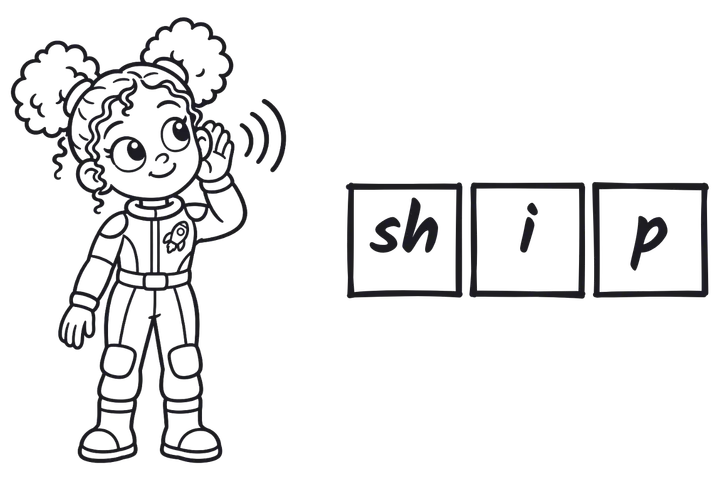
It means hearing the single sounds in a spoken word. The word ship has three.
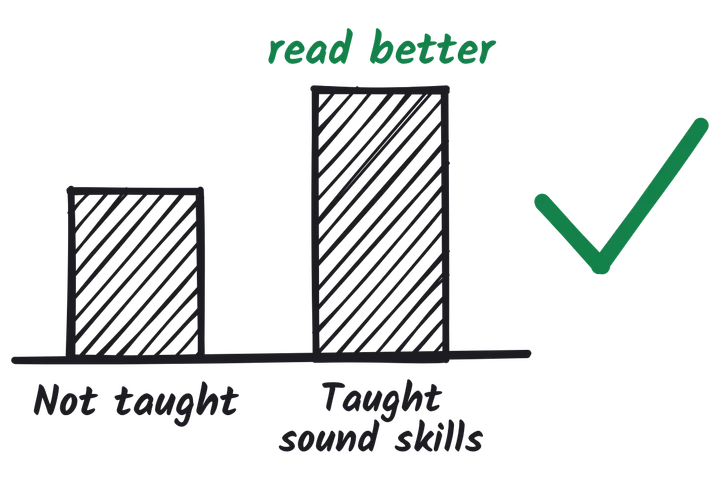
Does teaching it help? Yes. A U.S. panel found 52 studies. Children taught these sound skills learned to read better.
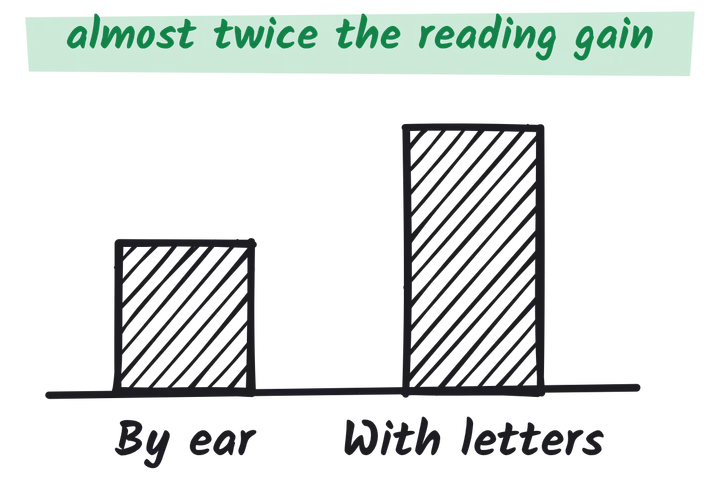
It worked best with letters. The reading gain was almost twice as large.
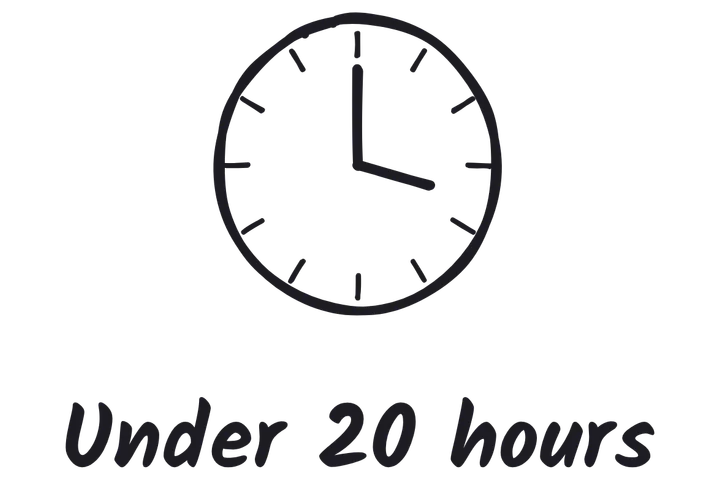
And it did not take long. Programs under 20 hours did best.
Harder drills by ear, past first grade? Nine researchers found no evidence yet that they help reading.
So keep it short. Use letters. Blend sounds, and break words apart. Then move on to reading.
So when the words won't come, you'll know where to start.
The 30-second answer
8 cards. Tap the arrow for the next one.
The short answer
Yes. Teaching phonemic awareness helps children learn to read. It works best with letters.
What is phonemic awareness?
Hearing the single sounds in a spoken word. The word "ship" has three sounds.
Phonemic awareness vs phonics
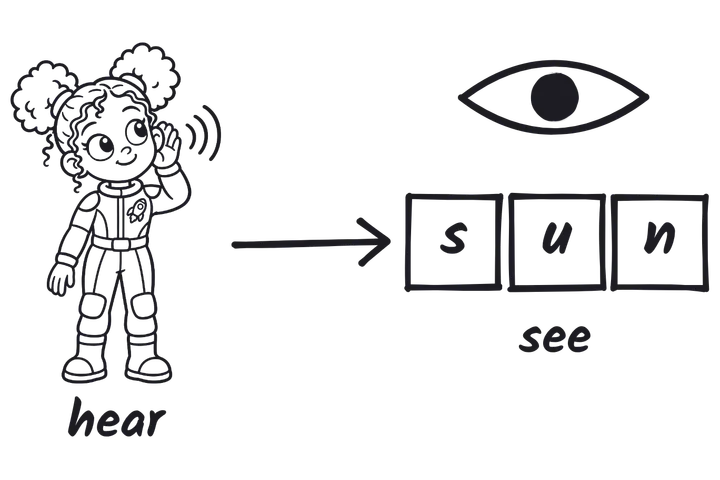
Phonemic awareness is sounds you hear. Phonics links those sounds to letters you see.
What works best
Use letters. The reading gain was almost twice as large with letters as with sounds alone.
How much is enough?
Programs under 20 hours did best for reading. More is not always better.
Does it last?
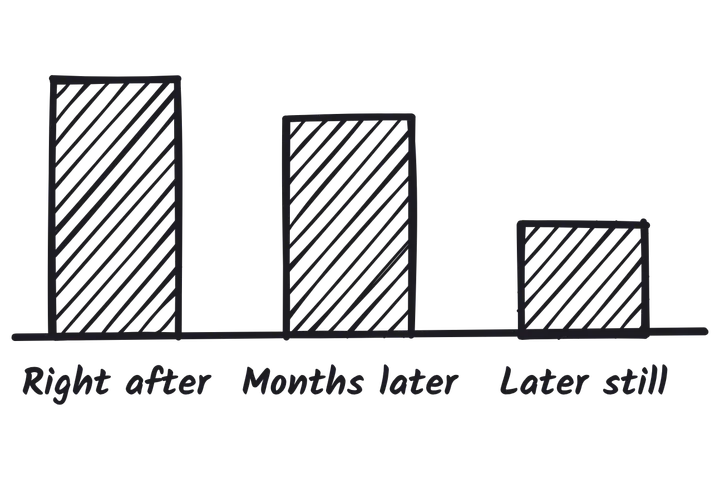
Reading gains were still there months later. By the last check, they were smaller.
What about "advanced" drills?
Harder drills by ear, past first grade: no evidence yet that they help reading.
What to do
Keep it short. Use letters. Blend sounds and break words apart. Then move on to reading.
The studies behind this answer
5 studies at a glance. Tap one for its Study Facts.
- National Reading Panel, 2000Government review of 52 studiesA large gain in sound skills. A medium gain in reading and in spelling.Strong
- Foorman and others, 2016Government guide, 17 studiesAll 17 studies found a gain in sound skills, in letter knowledge, or in both.Strong
- Suggate, 2016Review of 71 comparisonsGains from sound-only teaching mostly held. Across all kinds of reading help, gains shrank.Moderate
- Clemens and others, 2021Expert reviewNo evidence that the drills help reading. Teaching sounds with letters works better.Expert view
- Hall and others, 2023Review of 53 studiesA real but modest gain. Programs with a sound-skills part were a little ahead, but that could be chance.Strong
Evidence: Strong many fair tests agree · Moderate good but not settled · Limited few or weak tests · Expert view experts reading other research, no new test
What is phonemic awareness?
Phonemic awareness is the skill of hearing the single sounds in a spoken word, and working with them. The word ship has three sounds. English has about 41 of these sounds. They are called phonemes.
It is a skill for the ears. No letters are needed.
Three terms get mixed up:
- Phonological awareness is the wide term. It takes in bigger chunks of sound too, like rhymes and syllables.
- Phonemic awareness is the narrow part: the single sounds.
- Phonics teaches which letters stand for which sounds.
What the phonemic awareness studies found
Teaching it helps children learn to read. In 2000, the National Reading Panel put 52 studies together. Children who were taught this skill did better in sound skills, reading and spelling than children who were not. The gains showed up on standard tests too. They were still there months later, though smaller by the last check.
It worked best with letters. Some children moved letters as they worked with sounds. Their reading gain was almost twice as large as with sounds alone.
One or two skills beat many. Programs that taught one or two skills did better than programs that taught three or more. Blending sounds and breaking words into sounds helped reading more than a mix of many skills.
More was not better. Programs under 20 hours did best for reading. The panel warns that this is not a rule. Longer programs may have had harder goals.
Do the gains last? A 2016 review looked at tests given about 11 months after the teaching ended. Gains from sound-only teaching had mostly held. But that rests on 17 comparisons. The author says his numbers are likely a little too high.
Not every result was good news:
- Spelling. Struggling readers did not spell better after the teaching.
- Computers. Computers taught the skill. But the reading gain was smaller than with other ways of teaching.
- Dyslexia. In a 2023 review, programs with a sound-skills part were a little ahead of programs without one. The gap could be chance.
- Sounds, not reading. A 2016 government guide found 17 studies that met its standards. All 17 found gains. But the gains it counted were in sound and letter skills, not reading.
"Advanced" drills are not backed. Some programs drill harder tasks by ear, past first grade. One such task: say cat without the first sound. In 2021, nine researchers looked for evidence that such drills help reading. They found none. That is not proof the drills fail, they add. Their worry is the time lost for reading and spelling.
Phonemic awareness activities the studies back
Here is what the studies point to:
- Start early. The 2016 government guide says to begin "as soon as possible". In kindergarten it should help everyone, the panel says.
- Go from big to small. Words first, then syllables, then single sounds. Start with short words like sun and at.
- Use sound boxes. Draw one box for each sound. The child says the word slowly and pulls a disc into a box for each sound. Then the child blends the sounds and says the word.
- Bring in letters. Once a child knows a few letter sounds, use letter tiles in place of discs. Build fat. Then change one letter to make fan, then can, then cat.
- Blend and break apart. Stick to these two skills.
- Keep it short. Then move on to reading and spelling. Phonemic awareness is "a means rather than an end", the panel writes.
- Check first. Some children need more of it than others. Some do not need it.
Does your child keep struggling with sounds? One-to-one or small-group help often works, the government guide says.
Know a parent or teacher who is asking about this?
Go deeper
The background, section by section. Tap a section to open it.
1Is Heggerty backed by research?
Heggerty is a phonemic awareness program used in many schools. The 2021 researchers describe it this way:
- Lessons are often done by ear, with no letters.
- One lesson covers many skills, from rhymes to swapping sounds.
They knew of one fair test of it. It was not yet published. As they tell it:
- Children taught with Heggerty did better on sound tasks.
- They did no better at sounding out made-up words or at smooth reading.
We have not read that study itself.
The researchers are fair to the program. Its lessons are clear, they write, and are said to keep children interested. Heggerty also tells teachers to teach phonics.
2Why this matters to you
Schools spend time on this. The 2021 researchers put some drills at 10 to 15 minutes a day. They add it up to 36 to 54 hours a year.
It is also an early sign. At the start of school, phonemic awareness and letter knowledge are the two best signs of how well a child will learn to read, the panel notes.
3How the studies were done
Which studies we used
- 2000: 52 studies. The National Reading Panel, set up at the request of Congress.
- 2016: 17 studies. A U.S. government guide for teachers.
- 2016: 71 comparisons. A review of studies that tested children again later.
- 2021: an expert review of "advanced" drills. It had not been peer reviewed when it was posted.
- 2023: 53 studies of reading help for kids with dyslexia.
Four newer reviews are not covered here: Rice (2022), Rehfeld (2022), Erbeli (2024) and Stalega (2024). They could change this picture.
What was measured
Sound skills, reading and spelling. The panel's studies tested children right after the teaching. Some tested again, 2 to 36 months later.
Who was measured
The panel's studies ran from preschool to grade 6. They took in beginners, children at risk and older struggling readers. Each study had between 9 and 383 children.
Most studies in the 2016 guide were in kindergarten and grade 1.
How it was measured
Each study compared two groups. One group was taught phonemic awareness. The other got some other teaching, or just the usual lessons.
How fair were the tests? Most of the panel's studies put children into groups at random, the fairest kind of test. About one-third checked that lessons were taught as planned.
One caution comes from the panel itself. Its findings on how to teach, like letters, hours and group size, come from comparing one study with another. That is weaker than a direct test.
Who did the studies, and who paid
Each study's label at the top of this page shows who did it, who paid and any conflicts of interest.
One to note: some members of the 2016 guide's panel earn royalties from reading programs. The guide lists them.
4For teachers
Small groups did better than one-to-one or whole-class teaching in the panel's studies. The groups had two to seven children. The panel calls this finding highly tentative.
Lessons in the panel's studies ran about 25 minutes. The panel suggests no more than 30.
Some of the panel's tasks, from easy to hard:
- Match first sounds.
- Blend sounds into a word.
- Take a sound away.
- Break a word into its sounds.
For first words, the 2016 guide picks sounds you can stretch, like f, m and s.
5Questions parents and teachers ask
What is an example of phonemic awareness?
Hearing that ship has three sounds. Or blending three sounds into sun.
What is the difference between phonics and phonemic awareness?
Phonemic awareness works with sounds in spoken words. Phonics links those sounds to letters. Taught with letters, the two overlap.
What comes first, phonics or phonemic awareness?
Sound work can start first, with no letters. But the studies favor adding letters early.
Is rhyming phonics or phonological awareness?
Phonological awareness. A rhyme is a bigger chunk of sound than a single sound.
What are the phonemic awareness skills?
Lists differ. The National Reading Panel names six tasks: pick out a sound, match a sound, spot the odd one out, blend, break a word apart, and take a sound away.
Can I teach phonemic awareness at home?
The research we read can't say. None of the panel's studies used parents as teachers.
SSources and the exact numbers
- National Reading Panel, “Teaching Children to Read: Reports of the Subgroups”, Chapter 2, Part I: Phonemic Awareness Instruction, National Institute of Child Health and Human Development, 2000.Free U.S. government report (the chapter starts at page 2-1). For researchers, the exact results: phonemic awareness d = 0.86, reading d = 0.53, spelling d = 0.59 (52 studies, 96 comparisons); reading at the first later check d = 0.45, at the second d = 0.23; with letters d = 0.67 vs 0.38 without; one skill 0.71, two skills 0.79, three or more 0.27; reading by hours: 1 to 4.5 h 0.61, 5 to 9.3 h 0.76, 10 to 18 h 0.86, 20 to 75 h 0.31; computers d = 0.33 vs other forms 0.55; spelling in disabled readers d = 0.15, not significant.
- Barbara Foorman and others, “Foundational Skills to Support Reading for Understanding in Kindergarten Through 3rd Grade” (NCEE 2016-4008), What Works Clearinghouse practice guide, U.S. Department of Education, 2016.Free, public domain. Recommendation 2 (sounds and letters), rated strong: 17 studies; 12 randomized controlled trials meeting standards without reservations, 3 randomized trials and 2 quasi-experiments with reservations; 12 positive on phonology, 9 on letter names and sounds. The outcomes were sound and letter skills, not reading.
- Sebastian P. Suggate, “A Meta-Analysis of the Long-Term Effects of Phonemic Awareness, Phonics, Fluency, and Reading Comprehension Interventions”, Journal of Learning Disabilities 49(1), 2016, pp. 77–96 (online 2014).Free copy on the University of Regensburg server. For researchers: 71 comparisons, N = 8,161 at posttest, mean follow-up 11.17 months; all interventions dw = 0.37 at posttest, 0.22 at follow-up; phonemic awareness (Table 3, overall) dw = .43 at posttest, .36 at follow-up, k = 17. The paper's own numbers for phonemic awareness against phonics disagree between its text and tables, so none are given here.
- Nathan H. Clemens and others, “They Say You Can Do Phonemic Awareness Instruction ‘In the Dark’, But Should You? A Critical Evaluation of the Trend Toward Advanced Phonemic Awareness Training”, PsyArXiv preprint, December 2021.Free preprint, DOI 10.31234/osf.io/ajxbv; not peer reviewed in the version we read (updated December 21, 2021). An expert review, no new data. The one trial of Heggerty it describes (Coyne and others, then a manuscript in preparation) is reported only as these authors tell it.
- Colby Hall and others, “Forty Years of Reading Intervention Research for Elementary Students with or at Risk for Dyslexia: A Systematic Review and Meta-Analysis”, Reading Research Quarterly 58(2), 2023 (online September 2022).Free author manuscript. For researchers: all programs g = 0.33; with a phonemic awareness component g = 0.38 vs 0.22 without, p = .05, not a statistically significant moderator.
iWho wrote this, and how Sonoverse fits in
The Sonoverse team, Future Gen Press LLC. Sonoverse builds decodable books, guided phonics lessons and reading checks for children aged five to seven, sequenced to UFLI Foundations and IMSE Orton-Gillingham. The team reads the primary research behind the Science of Reading so parents and teachers don't have to start from scratch.
Sonoverse was not part of any study here. Like the teaching these studies back, it works with sounds and letters together, in a set order. A guide named Bolt says each sound and shows each step.
Find your child's starting point with the free word check.
Expert review outstanding. A separate checker compared each fact on this page with the paper it comes from. Last reviewed November 17, 2026.