
Reading guide · Parents of a K-1 child
Sight words vs phonics: which comes first?
Phonics first and most. Sounding a word out, then reading it again, is how it becomes a sight word. Most tricky words are odd in just one or two letters.
13 sources · Every fact checked against its source
Watch the answer
Read the video transcript
A list of sight words comes home from school. Should your child memorize them, or sound them out? Which comes first?
A sight word is any word your child knows in a flash. Phonics teaches how letters stand for sounds.
Phonics comes first. A child sounds a word out, reads it again, and after a few reads, knows it in a flash.
A U.S. Department of Education guide puts both in one step, and rates the evidence as strong.
And most common words play fair. One company counted: 138 of the 220 Dolch words can be sounded out.
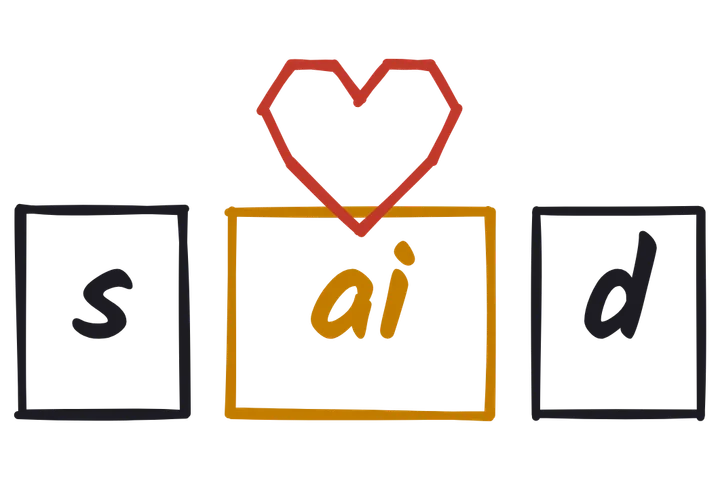
In most tricky words, only one or two letters break the rule. In the word said, the a and i say a short e.
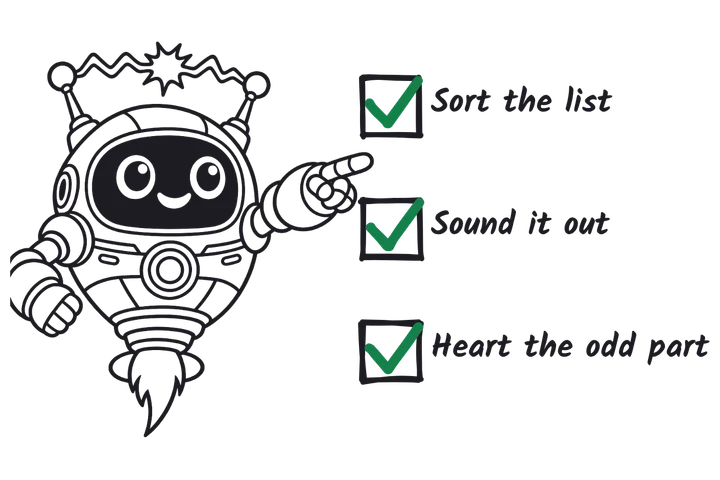
So sound out the parts that play fair. Learn the odd part by heart. And keep any memorized list short.
Then when the next word list comes home, you'll know what to do.
The 30-second answer
8 cards. Tap the arrow for the next one.
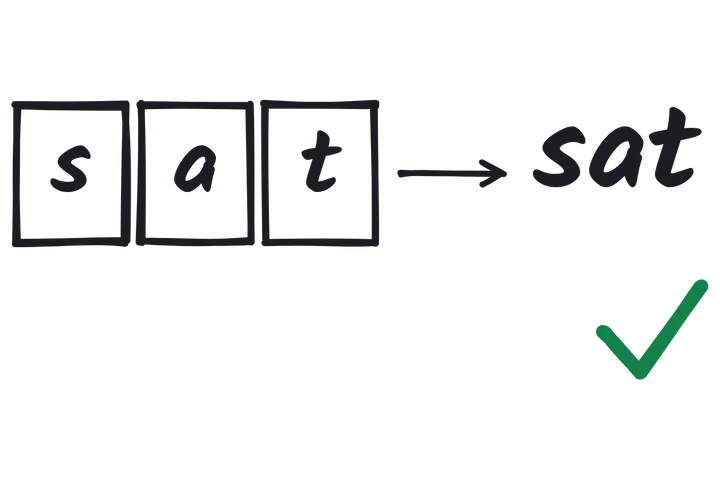
The short answer
Phonics first and most. Sounding a word out, then reading it again, is how it becomes a sight word.
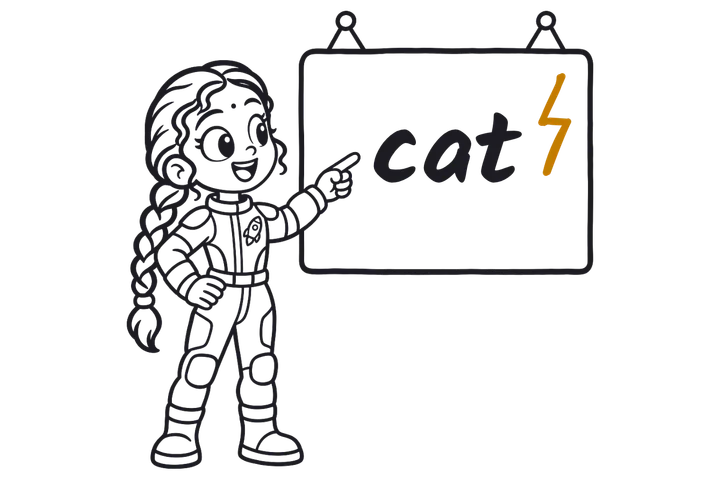
What is a sight word?
Any word your child knows in a flash, with no sounding out. Not a special list.
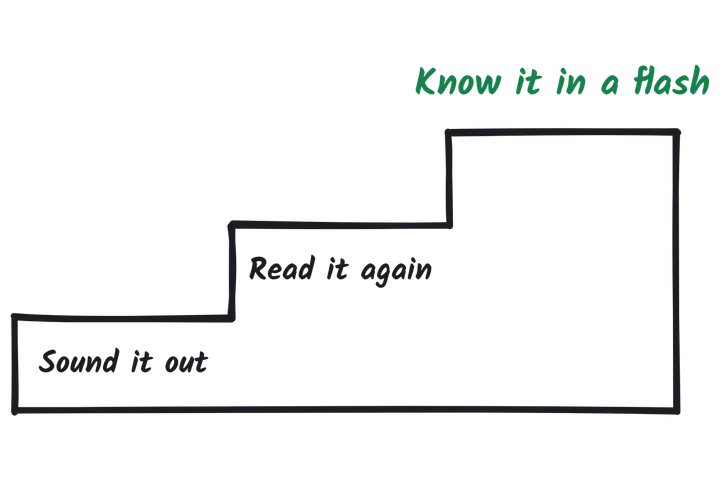
How does a word stick?
Sound it out. Read it again. After a few clean reads, the word is in memory.
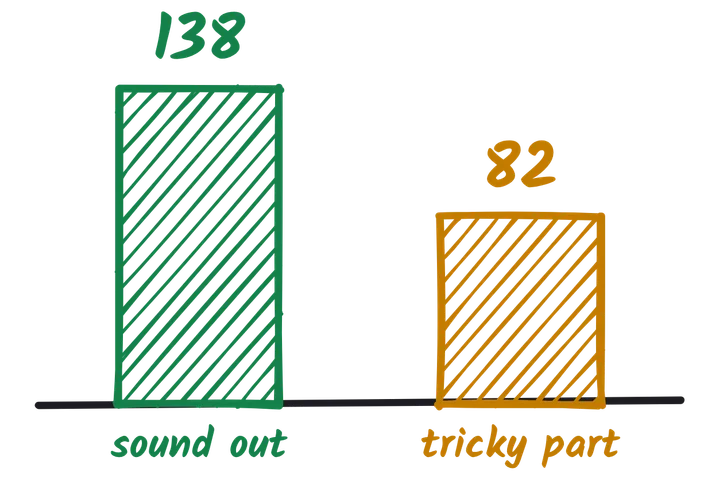
Can most be sounded out?
Yes. Of the 220 Dolch words, 138 can be sounded out once the patterns are taught. That is a company's count, not a study.
What makes a word tricky?
Most break the rules in only one or two letters. In said, only the ai is odd: it says short e.

Do heart words work?
Not proven yet. In one study of 85 kindergartners, working with the spelling beat just looking. It did not test the heart mark.
Is memorizing bad?
Not in small doses. A small number of sight words, studied in detail, has its place alongside phonics, three researchers write.
What to do this week
Sort the school's list into two piles: words to sound out, and words with a tricky part. Put a heart on the tricky part.
What is a sight word?
The term has two meanings. That causes most of the mix-up.
- A list to learn by look. A set of very common words that children are asked to know on sight, often from flash cards. The Dolch list of 220 words is widely used.
- Any word read in a flash. This is what reading researchers mean: any word your child has read enough times to know at once, with no sounding out. Cat for a first grader. Elephant for you.
Linnea Ehri has studied this for decades. She writes that people "used to regard sight words as limited to high-frequency or irregularly spelled words, but it turns out that all words when practiced become read from memory by sight."
So a word your child sounds out today can be a sight word next month. The goal is not a longer flash-card list. The goal is for almost every word to be known in a flash.
Sight words vs phonics: what the research found
Both, side by side, and phonics does most of the work. Phonics teaches a child how letters stand for sounds. Sight words are the words a child knows in a flash. The first is how you get the second.
One federal guide puts both in one step. The U.S. Department of Education has a guide for teaching reading in kindergarten to third grade. It puts both in one recommendation, and it rates the evidence for that recommendation as strong. Its steps start with blending letter sounds. A later step is to teach common words "so that students can recognize them efficiently."
A word sticks through its sounds, not its shape. A word sticks when a child links its letters to its sounds. Ehri describes young children who know a word only by a shape, a logo or a picture near it. She rates that kind of word memory "unreliable". Children who link each letter to its sound have word memory that is "accurate, automatic".
Most common words can be sounded out. One count comes from Readsters, a company that trains reading teachers. Its authors went through the 220 words on the Dolch list. They found that 138 can be sounded out once all the regular spelling patterns have been taught. The other 82 have an irregular part. This is the company's own count, not a published study.
In most tricky words, only one or two letters are odd. Some common words do break the rules. UFLI is the University of Florida Literacy Institute. It tells teachers that children "can learn to decode most of the word, and they only have to learn one or two letters 'by heart.'"
The proof for the heart method is thin. A 2022 study taught irregular words to 85 kindergartners in a few ways. The children learned more when they worked with the spelling than when they just looked at the word and said it. The study did not test the heart mark.
A short memorized list has its place. Three leading researchers write that "a small number of sight words for children to study in detail has its place in the classroom alongside phonics." The federal guide says to teach irregular words "as whole words". So keep any memorized list short.
What to do at home this week
- Ask what has been taught. Which letter sounds? Which words?
- Sort the school's word list. Make two piles: "sound it out" and "has a tricky part".
- Sound out the first pile. UFLI tells parents: "Instead of having your child memorize these words, use them to help your child practice applying what they have learned about letters and sounds."
- Put a heart on the second pile. Three to five words at a time is plenty.
- Keep it short, then read. A few minutes a day on words. Then a book your child can sound out.
New to sounding out? Our guide for parents of a K-1 child has a two-minute check and a ten-minute daily routine. For the books to use, see decodable books.
Know a parent or teacher who is asking about this?
Go deeper
The background, section by section. Tap a section to open it.
1How does a word become a sight word? Orthographic mapping
Not by its shape. Ehri's name for the process is orthographic mapping. It forms "letter-sound connections to bond the spellings, pronunciations, and meanings of specific words in memory." She says the links work like glue.
- Sound it out. Your child says each sound and blends them: s-a-t, sat.
- Read it again. And again: in a list, in a sentence, in a book.
- Know it in a flash. After a few clean reads, the word is in memory.
Ehri puts it this way: "decoding letters into blended sounds helps readers figure out words they have not read before. Rereading them a few times moves the words into memory so they can be read by sight."
2How many sight words can be sounded out?
More than most people think. But "can be sounded out" depends on what has been taught. Only 60 of the 220 are short-vowel words that a kindergartner can sound out early. Words like like and down have to wait for later patterns.
Common "sight words" that follow the rules:
- Sound out early: at, am, an, it, in, if, on, up, had, can, him, did, big, not, but, run, get, yes, red
- Once blends are taught: and, went, just, must, fast, best, ask, jump, help, stop
- Once th, ch, wh, ck and sh are taught: that, with, then, them, this, much, when, which, pick, wish
3Which sight words are truly irregular?
These common words break the rules. The middle column shows the tricky part.
| Word | The tricky part | What it says |
|---|---|---|
| the | e | "uh" |
| of | o and f | "uh", then "v" |
| to, do | o | "oo", as in boot |
| said | ai | short e, as in red |
| was | a | "uh" |
| what | a | "uh" |
| you | ou | "oo" |
| they | ey | long a, as in day |
| there, where | ere | "air" |
| one | o and e | Only the n plays fair. |
| who | wh and o | "h", then "oo" |
| could, would, should | oul | "oo", as in cook |
| some, come | o and the last e | short u, as in sun |
The tricky letters come from the word cards and lists that UFLI and Readsters publish. The plain-word sounds in the last column are ours. They shift a little with accent.
The lists do not agree on every word. Readsters counts is, his, as and has as irregular, because the s says "z". UFLI treats that s as regular.
4Heart words: how to teach a tricky word
The best-known way to teach these words is called the heart word method. You sound out the letters that play fair. You mark the tricky part with a heart. That part is learned "by heart".
These steps follow UFLI's printable heart word cards.
- Say the word and count its sounds. Said has three sounds.
- Match the letters that play fair. The s says its sound. So does the d.
- Find the tricky part and draw a heart over it. In said, the ai says short e.
- Write the word and say each sound. Then read it in a sentence.
UFLI's words for parents are simple. "These words have a tricky part, and that part needs to be learned 'by heart.' The rest of the word can be sounded out."
5How to teach blending
Blending is how sounds turn into a word. The federal guide calls it "the process of reading a word systematically from left to right". A child who can blend can read words no one has taught. That is why it comes before any word list.
- Start small. The guide says to "start with simple consonant-vowel-consonant (CVC) words". Think man, sit and hop.
- Stretch the sounds and keep them joined. Say "mmmaaannn", not "m ... a ... n". A 2021 study with kindergartners found that joined-up sounding worked better. Stopping between sounds seemed to make children forget the first one.
- Do not add "uh". Say a short "b", not "buh". The extra sound makes the word hard to hear.
- Check the word. Is it a real word? Does it make sense? The guide says to teach children to ask.
6Questions parents ask
Should I teach phonics or sight words first?
Phonics first and most. A child who can sound out words can read most common words with no flash cards. A few very common words, such as the and was, can be taught early, so your child can read real sentences from the start.
Are sight words part of phonics?
Most are. More than half of the Dolch words can be sounded out once the patterns are taught. And phonics is how any word becomes a sight word.
What are 5 examples of sight words?
Five from the Dolch list: the, said, and, can, was. Of these, and and can can be sounded out.
Are reading and phonics the same?
No. Phonics is one tool for reading. The National Reading Panel put it in a line: "phonics teaching is a means to an end." The end is reading with understanding. That also takes words, knowledge and lots of books.
Is it bad to memorize sight words?
Not in small doses. Timothy Shanahan, who served on the National Reading Panel, writes: "I know of no brain research that shows memorizing words to be a bad practice."
How many sight words should a kindergartner know?
No research gives a number. Readsters suggests 10 to 15 very common words before phonics starts. That is the company's own advice, not a study. After that, most new words should come from sounding out.
Does brain research prove phonics beats memorizing?
Not by itself. One brain study is often quoted. It taught 16 adults a made-up script in two ways. With the letter-sound way, they could read new words. But the whole-word way was faster and more accurate on the taught words. It was a small study of adults, not children.
SSources and the exact numbers
- Linnea C. Ehri, "Orthographic Mapping in the Acquisition of Sight Word Reading, Spelling Memory, and Vocabulary Learning", Scientific Studies of Reading 18(1), 2014, pp. 5–21.All words become sight words with practice (p. 5); orthographic mapping (abstract); the "glue" (p. 6); decoding then rereading (p. 5); Table 1 on word memory by phase (p. 8).
- Barbara Foorman et al., "Foundational Skills to Support Reading for Understanding in Kindergarten Through 3rd Grade", IES Practice Guide, 2016.Recommendation 3, rated strong evidence (pp. 22–23); high-frequency words (p. 28), with irregular words taught "holistically—that is, as whole words"; blending (pp. 23–25); the word-reading steps end with a check that the word makes sense (p. 33).
- Linda Farrell, Tina Osenga and Michael Hunter, "A New Model for Teaching High Frequency Words", Readsters, 2013.The company's own count of the Dolch 220: 138 decodable (63%), 82 with an irregular part (37%), 60 short-vowel one-syllable words; heart letters; 10 to 15 words before phonics. Not peer-reviewed.
- University of Florida Literacy Institute, "Irregular and High Frequency Words"."They only have to learn one or two letters 'by heart.'"
- University of Florida Literacy Institute, "Printable Cards for Irregular 'Heart' Words", 2022.Which letters carry the heart in each word; the steps for teaching a heart word.
- University of Florida Literacy Institute, "Weekly Reading and Spelling Home Practice Guide", 2022.The words for parents on the tricky part, and the advice not to memorize word lists.
- Danielle Colenbrander et al., "Teaching Children to Read Irregular Words: A Comparison of Three Instructional Methods", Scientific Studies of Reading 26(6), 2022, pp. 545–564.85 kindergartners; working with the spelling beat look-and-say; no carry-over to untaught words. It did not test heart-marking. Read in full (author archive copy).
- Anne Castles, Kathleen Rastle and Kate Nation, "Ending the Reading Wars: Reading Acquisition From Novice to Expert", Psychological Science in the Public Interest 19(1), 2018, pp. 5–51."A small number of sight words ... has its place in the classroom alongside phonics."
- Selenid M. Gonzalez-Frey and Linnea C. Ehri, "Connected Phonation Is More Effective than Segmented Phonation for Teaching Beginning Readers to Decode Unfamiliar Words", Scientific Studies of Reading 25(3), 2021, pp. 272–285.Read as the ERIC abstract: joined-up sounding beat broken sounding with kindergartners; breaks made children forget the first sounds.
- National Reading Panel, Report of the National Reading Panel: Findings (NICHD, 2000)."Phonics teaching is a means to an end."
- Timothy Shanahan, "Should We Still Teach Sight Vocabulary?", Shanahan on Literacy, November 11, 2023.Expert blog: "I know of no brain research that shows memorizing words to be a bad practice."
- Yuliya N. Yoncheva, Jessica Wise and Bruce McCandliss, "Hemispheric specialization for visual words is shaped by attention to sublexical units during initial learning", Brain and Language 145–146, 2015, pp. 23–33.A brain study of 16 adults who learned a made-up script; letter-sound learners read new words; whole-word learners were faster and more accurate on taught words.
- Jerry L. Johns and others, "The Dolch Basic Sight Vocabulary Investigation: A Replication and Validation", 1974 (ERIC ED094329).The Dolch list: 220 words, first published by Edward Dolch in 1936.
iWho wrote this, and how Sonoverse fits in
The Sonoverse team, Future Gen Press LLC. Sonoverse builds decodable books, guided phonics lessons and reading checks for children aged five to seven, sequenced to UFLI Foundations and IMSE Orton-Gillingham. The team reads the primary research behind the Science of Reading so parents and teachers don't have to start from scratch.
Sonoverse teaches phonics in a set order. A guide named Bolt says each sound and shows the step. Each lesson connects sounds, blending, spelling and reading. Common words come in along the way, a few at a time.
The order follows one of two published sequences, UFLI Foundations or IMSE. You pick the one your child's school uses. Sonoverse is not affiliated with either.
The research on this page is about how children learn words in general. It is not a study of Sonoverse. Find your child's starting point with the free word check.
Expert review outstanding. A separate checker compared each fact on this page with the source it comes from; some journal studies were read as published abstracts. The plain-word sounds in the word table are ours and shift a little with accent. Last reviewed November 17, 2026.