
Research Library · Parents and teachers
Phonics or whole language: which works better?
Phonics taught in a planned order beats whole language, a U.S. panel found in 38 studies. But phonics is one part of learning to read. Here is the research.
5 studies · Every fact checked against its source
Watch the answer
Read the video transcript
How does your school teach reading? Two names come up: phonics and whole language. Which works better?
Phonics teaches letter sounds in a planned order. Whole language starts with real books and teaches sounds as needed.
Phonics does. A U.S. panel put 38 studies together. Children taught phonics in a planned order read better.
But phonics is not enough alone. The panel calls it a means to an end.
Not everyone agrees. One critic calls it a draw. Three researchers replied that the evidence for phonics is consistent.
And three-cueing, where a child guesses a word from clues? Twelve researchers call a guess a lost chance to learn the word.
So ask for letter sounds taught in a planned order. And keep reading real books together.
Then when the school explains how it teaches reading, you'll know what to ask.
The 30-second answer
8 cards. Tap the arrow for the next one.
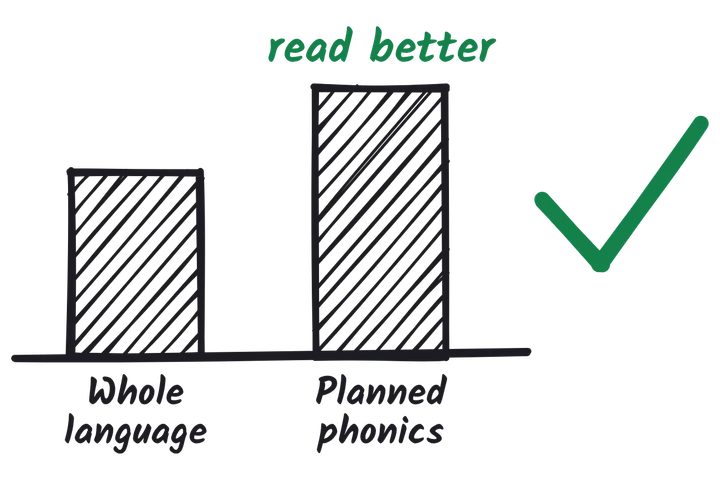
The short answer
Phonics taught in a planned order beats whole language. But phonics is one part of learning to read, not all of it.
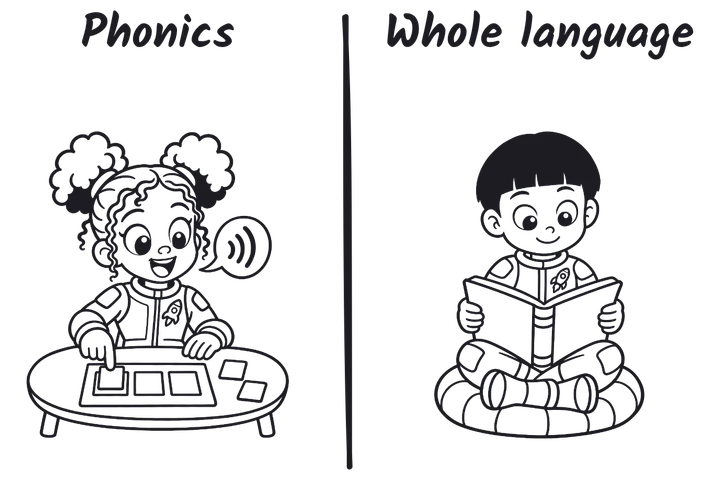
Phonics vs whole language
Phonics teaches letter sounds step by step. Whole language starts from real books and teaches sounds only as the need comes up.
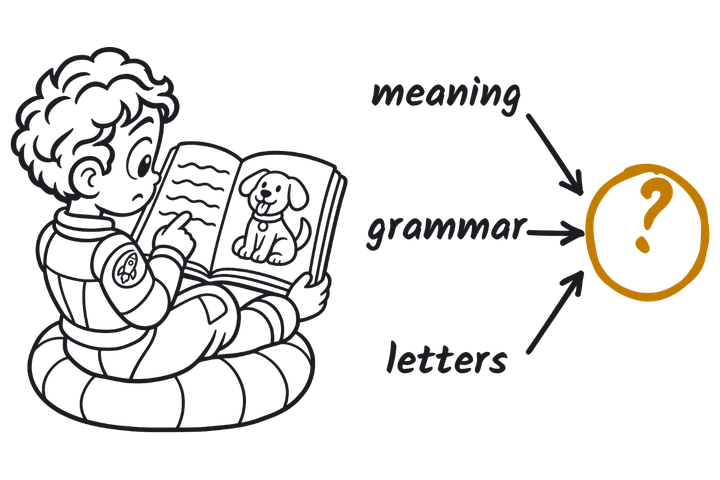
What is three-cueing?
A child stuck on a word uses three clues to guess it: the meaning, the grammar and the letters.
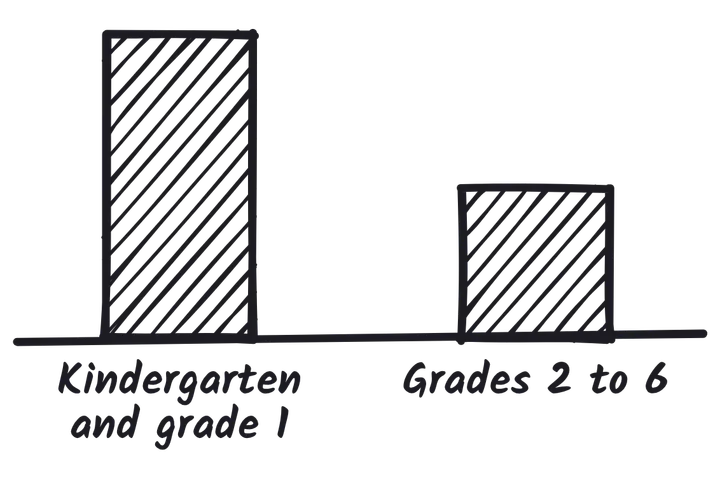
How big is the gain?
Medium. It was larger in kindergarten and first grade. But most of the older kids tested were struggling readers.
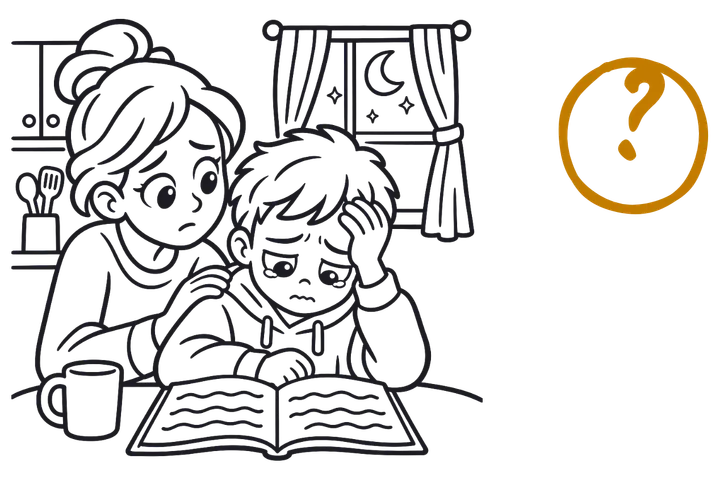
Did it help everyone?
No. For older low achievers, the gain was small and could be chance. The panel drew no conclusion for them.
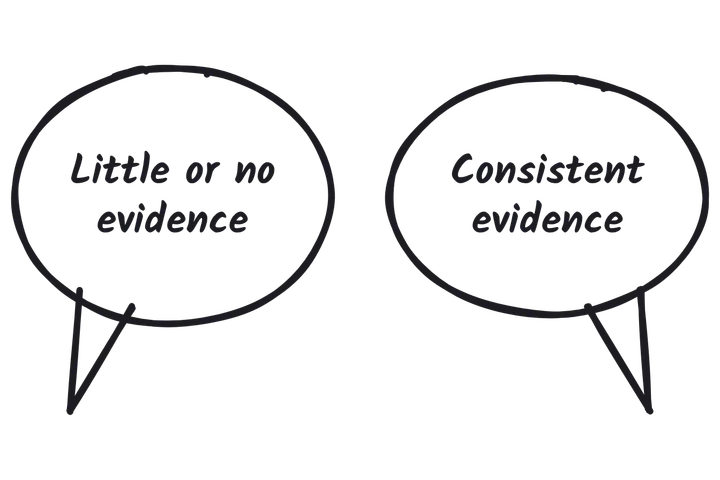
Does everyone agree?
No. A 2020 critic found "little or no evidence" that planned phonics beats whole language. Three researchers replied that the evidence is consistent.
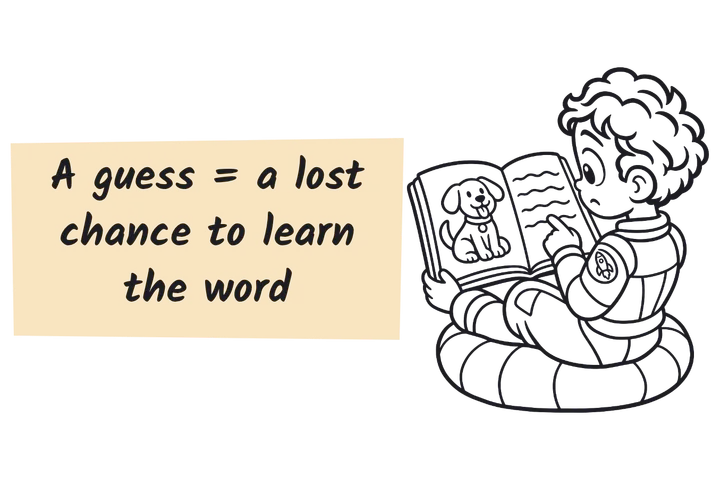
Why do researchers reject three-cueing?
It lacks research support, 12 researchers write. And a guess is a lost chance to learn the word.
What to do
Ask how letter sounds are taught. Look for a planned order. Sound words out, don't guess. Keep reading real books.
The studies behind this answer
5 studies at a glance. Tap one for its Study Facts.
- National Reading Panel, 2000Government review of 38 studiesA medium gain in reading. It was larger in kindergarten and first grade, but most older kids tested were struggling readers.Strong
- Bowers, 2020Critique of 12 earlier reviews"Little or no evidence" that planned phonics beats the usual methods. He calls it "a draw".Expert view
- Fletcher and others, 2021Reply to the 2020 critique"Consistent evidence" for teaching phonics clearly and on purpose. But phonics alone is not best.Expert view
- Castles and others, 2018Expert reviewMost children must be taught how letters stand for sounds. But phonics is not all there is to learning to read.Expert view
- Petscher and others, 2020Expert reviewStrong support for planned, explicit phonics. Three-cueing lacks support and goes "directly against" what is known.Expert view
Evidence: Strong many fair tests agree · Moderate good but not settled · Limited few or weak tests · Expert view experts reading other research, no new test
Phonics vs whole language: what are they?
What is phonics?
Phonics teaches children which letters stand for which sounds. It also teaches how to blend the sounds into words. In systematic phonics, the letter sounds are taught in a planned order.
What is the whole language approach?
Whole language starts from meaning. Children read and write real texts from the start. Letter sounds are taught too, but only as the need comes up, with no set order.
What is the three-cueing system?
Whole language treats letters as just one of three kinds of clues, the panel notes. A child stuck on a word uses all three to work it out: the meaning of the story, the grammar of the sentence and the letters. In 1967, Ken Goodman called reading a "psycholinguistic guessing game", one review recounts.
What is balanced literacy?
It is meant to mix whole language with phonics. The name is often used for programs with "a bit of everything", three researchers write. They add that the phonics in such programs is typically limited and has no set order.
What the phonics vs whole language studies found
Phonics in a planned order came out ahead. In 2000, the National Reading Panel put 38 studies together. Children taught phonics in a planned order read better than children taught with little or no phonics. The gain was medium in size. The fairest tests found the same gain.
It beat whole language too. That finding rests on 12 comparisons.
The gain was larger early. It was larger in kindergarten and first grade than in grades 2 to 6. But most of the older children were struggling readers, the panel warns. So age may not be the reason.
Word reading gained most. Understanding text improved too, but less. Above first grade, that gain could be chance.
Not every result was good news:
- Older low achievers. In grades 2 to 6, their gain was small and could be chance. The panel drew no conclusion for them.
- Spelling. Children above first grade did not spell better.
- It fades. A few studies tested again 4 to 12 months later. The gain was still there, but smaller.
- Some phonics, not none. Some comparison classes taught phonics too. So a "substantial number" of studies may show that more phonics beats less, the panel notes.
A critic says the case is overstated. In 2020, Jeffrey Bowers reread 12 earlier reviews. Whole language classes teach some phonics too, he notes. In most cases, he writes, the reviews did not test planned phonics against that. He found "little or no evidence" that planned phonics beats the usual methods, whole language among them. He calls the reading wars "a draw". He does not say whole language is better. He does not say letter sounds are unimportant.
Three researchers answered him. They see "consistent evidence" for teaching phonics clearly and on purpose. They agree with him that the panel's summary overstated its own chapter, and that phonics alone is not best. But they reject "a draw".
Three-cueing lacks support. In 2020, 12 researchers listed three-cueing among practices that lack research support. It runs "directly against" what is known about reading, they write. Children store words in memory by linking letters to sounds. So a guess, they write, is a lost chance to learn the word.
How to teach reading: what the studies back
- Teach letter sounds on purpose, in a planned order. Most children must be taught how letters stand for sounds, three researchers write. It does not typically come naturally.
- Start early. The panel's largest gains were in kindergarten and first grade.
- Sound it out. When a child is stuck on a word, point to the letters, not the picture.
- Use decodable books at the very start. These are made of words a child can sound out. Past the first stages, the case for them weakens, the same three researchers write.
- Teach a few tricky words by sight. Words like the and said break the rules. Teaching a small number of them has its place alongside phonics.
- Keep reading real books. "Phonics instruction is never a total reading program", the panel writes.
- Don't choose by brand. No one phonics program was shown to beat the others. The panel wanted more evidence.
Ask the school how children are taught to read a word they do not know.
Know a parent or teacher who is asking about this?
Go deeper
The background, section by section. Tap a section to open it.
1Is Leveled Literacy Intervention backed by research?
In 2020, 12 researchers looked at what they call the five most popular reading programs in U.S. schools. As they tell it:
- Only two had studies that met U.S. government standards. They were Leveled Literacy Intervention and Reading Recovery. Both are for struggling readers.
- For Leveled Literacy Intervention, the results were mixed.
- For Reading Recovery, they were positive or potentially positive.
We have not read those studies. The paper does not say how these programs teach kids to read words.
The papers we read cite Fountas and Pinnell and Lucy Calkins, but only in passing. None gives a result under either name.
2Why this matters to you
Reading is not like talking. A child who hears rich speech will almost certainly learn to talk. Not so for reading, three researchers write. It is a learned skill.
One review traces the reading wars back over 200 years.
3How the studies were done
Which studies we used
- 2000: 38 studies. The National Reading Panel's phonics chapter.
- 2018: an expert review by three researchers.
- 2020: a critique by one researcher of 12 earlier reviews.
- 2021: a reply to that critique by three researchers.
- 2020: an expert review by 12 researchers.
One review we wanted was not free to read: Torgerson and others (2018). We did not read the older studies the critic and the reply argue over. Those could change this picture.
What was measured
Reading words and made-up words, spelling, reading aloud and understanding text. About three in four results were for single words, not text.
Who was measured
Children from kindergarten to grade 6. About two in three comparisons were of children with reading problems.
Most studies were from the United States.
How it was measured
Each study compared two groups. One was taught phonics in a planned order. The other was taught little or no phonics.
How fair were the tests? In 23 of 62 comparisons, groups were formed at random. That is the fairest kind of test.
The panel adds a caution. Its findings on ages and on kinds of phonics come from comparing one study with another. That is weaker than a direct test.
Who did the studies, and who paid
Each study's label at the top of this page shows who did it and who paid.
Note that the 2020 critic argues for another way to teach, called structured word inquiry.
4For teachers
Kinds of phonics did not differ reliably in the panel's studies. Some programs teach children to say each sound and blend. Others work with larger parts of words.
Tutoring, small groups and whole classes all worked. None was reliably better.
The panel's own cautions:
- Check what each child knows first. Some already know most letter sounds.
- Teach children to use letter sounds in reading and writing, not just to know them.
- Do not let phonics become the dominant part of a reading program.
5Questions parents and teachers ask
What is the science of reading?
The phrase stands for what research has learned about reading, how it develops and how best to teach it.
Why is the 3 cueing system banned?
The papers we read do not cover laws. They do say why researchers reject it: a guess is a lost chance to learn the word.
Did schools stop teaching phonics?
Not fully. By the 1980s and 1990s, a first grade program with no phonics was rare, the panel says. But whole language taught it with no set order.
Does phonics hurt understanding?
No. The panel found gains in understanding for young children. "Quite the opposite is the case", it writes.
SSources and the exact numbers
- National Reading Panel, “Teaching Children to Read: Reports of the Subgroups”, Chapter 2, Part II: Phonics Instruction, National Institute of Child Health and Human Development, 2000.Free U.S. government report (the chapter starts at page 2-89). For researchers, the exact results: 38 studies, 66 comparisons; overall d = 0.44 (end of training or one year); kindergarten and first grade d = 0.55, grades 2 to 6 d = 0.27; against whole language classes d = 0.31 (12 comparisons), against whole word classes d = 0.51; random assignment d = 0.45 (23 comparisons) vs existing groups d = 0.43 (39); decoding regular words d = 0.67, comprehension d = 0.27 (younger children 0.51; older 0.12, not significant); low achievers in grades 2 to 6 d = 0.15, not significant (8 comparisons); spelling above first grade d = 0.09, not significant; follow-up after 4 to 12 months: from d = 0.51 to d = 0.27 (6 comparisons).
- Jeffrey S. Bowers, “Reconsidering the Evidence That Systematic Phonics Is More Effective Than Alternative Methods of Reading Instruction”, Educational Psychology Review 32, 2020, pp. 681–705.Free (open access), DOI 10.1007/s10648-019-09515-y. A critique by one researcher of 12 earlier reviews and of England's national results; no pooled number of its own. The numbers it quotes from other reviews are not repeated here.
- Jack M. Fletcher, Robert Savage and Sharon Vaughn, “A Commentary on Bowers (2020) and the Role of Phonics Instruction in Reading”, Educational Psychology Review 33(3), 2021, pp. 1249–1274 (online November 2020).Free author manuscript, DOI 10.1007/s10648-020-09580-8. A reply to Bowers (2020); no new pooled numbers.
- Anne Castles, Kathleen Rastle and Kate Nation, “Ending the Reading Wars: Reading Acquisition From Novice to Expert”, Psychological Science in the Public Interest 19(1), 2018, pp. 5–51.Free, DOI 10.1177/1529100618772271. A tutorial review of other research; we read the authors' accepted manuscript. No pooled numbers of its own.
- Yaacov Petscher and others, “How the Science of Reading Informs 21st-Century Education”, Reading Research Quarterly 55(S1), 2020, pp. S267–S282.Free author manuscript, DOI 10.1002/rrq.352. An expert review by twelve researchers, all at the Florida Center for Reading Research; no pooled numbers of its own.
iWho wrote this, and how Sonoverse fits in
The Sonoverse team, Future Gen Press LLC. Sonoverse builds decodable books, guided phonics lessons and reading checks for children aged five to seven, sequenced to UFLI Foundations and IMSE Orton-Gillingham. The team reads the primary research behind the Science of Reading so parents and teachers don't have to start from scratch.
Sonoverse was not part of any study here. Like the teaching these studies back, it teaches letter sounds in a planned order. A guide named Bolt says each sound and shows each step.
Find your child's starting point with the free word check.
Expert review outstanding. A separate checker compared each fact on this page with the paper it comes from. Last reviewed November 17, 2026.