
Research Library · Parents and teachers
Does Orton-Gillingham work?
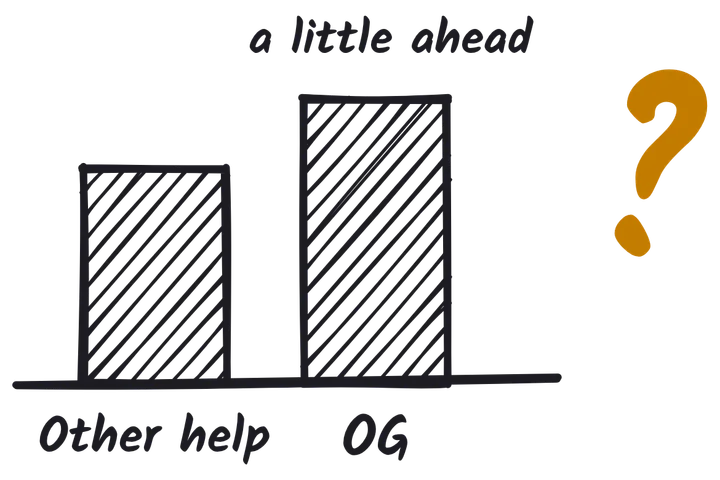
Orton-Gillingham is a widely used way to teach kids with dyslexia. Studies have not shown it works better than other reading help. Here is what they found.
5 studies · Every fact checked against its source
Watch the answer
Read the video transcript
Your child is stuck on a word. Again. You keep hearing about Orton-Gillingham. But does it really work?
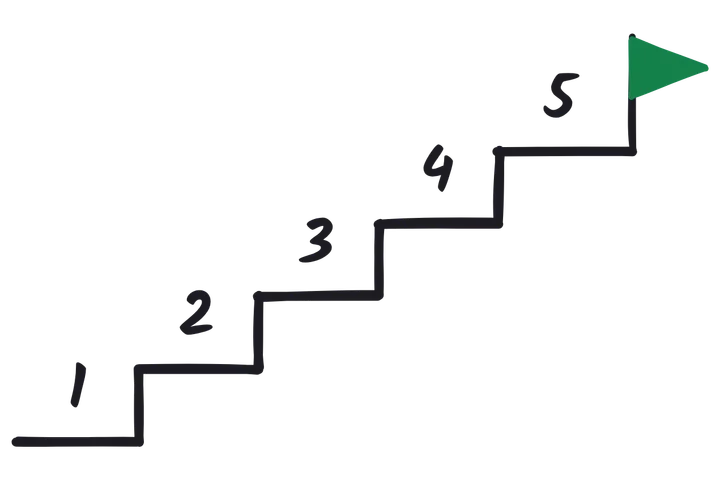
OG, for short, teaches reading in small steps, in a set order, for kids with dyslexia.
The newest review of OG, from 2021, found 24 studies. OG kids were a little ahead. But the gap could be chance.
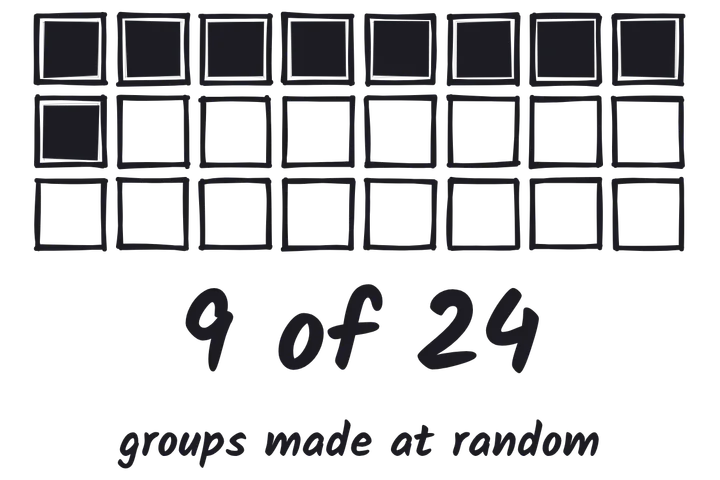
Only 9 of the 24 studies put kids into groups at random, the fairest kind of test. And most were small.
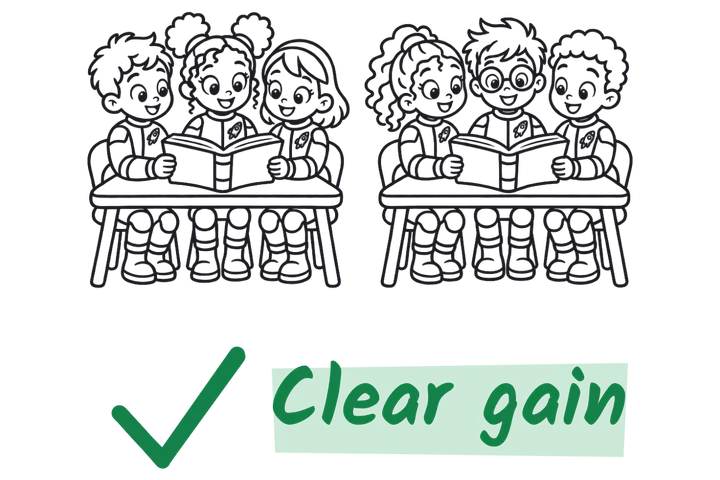
What clearly helps is teaching basic skills, like letter sounds and word reading. 53 studies back it.
The hands-on part, like tracing letters in sand, has not been shown to add more.
So look past the label. Ask what is taught, in what order, and how progress is checked.
So the next time your child gets stuck, you'll know what to look for.
The 30-second answer
8 cards. Tap the arrow for the next one.
The short answer
Orton-Gillingham (OG) has not been shown to beat other reading help. OG kids were a little ahead, but the gap could be chance.
What is Orton-Gillingham?
A way to teach reading in small steps, in a set order. It is aimed at kids with dyslexia.
Why aren't we sure?
The OG studies were few and mostly small. Only 9 of 24 put kids into groups at random.
What clearly helps
Teaching basic skills: letter sounds and word reading, often with spelling. 53 studies back it.
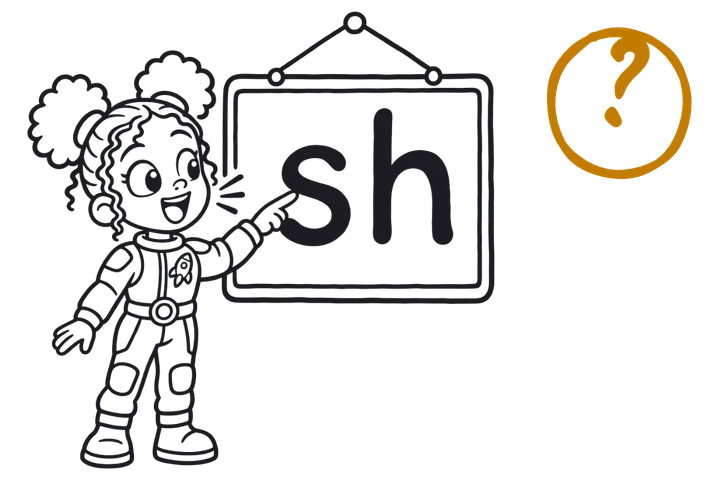
The hands-on part
Tracing letters in sand may keep a child interested. No evidence shows it helps reading.
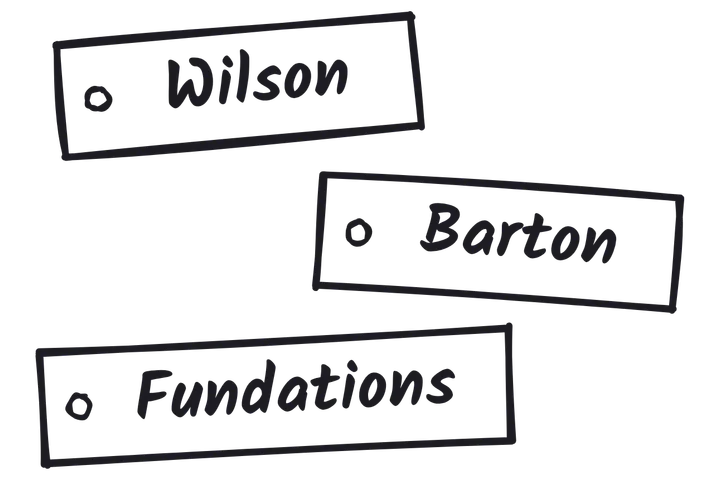
Are Wilson and Barton OG?
Yes. Wilson, Barton and Fundations are brand-name programs based on OG.
Already using OG?
Is your child doing well with OG? Our view: this research gives no reason to stop.
What to do
Look past the label. Ask what is taught, in what order, and how progress is checked.
The studies behind this answer
5 studies at a glance. Tap one for its Study Facts.
- Stevens and others, 2021Review of 24 OG studiesA little ahead, but it could be chance.Limited
- What Works Clearinghouse, 2010Government review of 31 studiesNo conclusion either way.Limited
- Hall and others, 2023Review of 53 studiesA real but modest gain.Strong
- Al Otaiba and others, 2023Review of 14 reviewsStep-by-step help works best for word reading. OG was not shown to do better.Moderate
- Austin and others, 2023Expert summaryThree parts are backed. The hands-on part is not.Expert view
Evidence: Strong many fair tests agree · Moderate good but not settled · Limited few or weak tests · Expert view experts reading other research, no new test
What is the Orton-Gillingham approach?
Orton-Gillingham, or OG, is a way to teach reading. It was first used in the early 1900s. It is aimed at kids with dyslexia.
OG has four main parts:
- Clear teaching. Show it. Practice it together. Then try it alone.
- A set order. From easy to hard, with review.
- Close checks. Plan the next lesson around the child's mistakes.
- Hands-on. See, hear and touch at the same time, like tracing letters in sand.
What the Orton-Gillingham studies found
OG kids were a little ahead, but it could be chance. In the 2021 authors' words, the results show "promise but not confidence". Their results do not prove that OG fails, they write. They do not claim that other programs work better, either.
Step-by-step teaching of basic skills clearly helps. In the 2023 review, teaching letter sounds and word reading, often with spelling, gave kids with or at risk for dyslexia a real gain. That review took in 53 studies and 6,053 kids.
The hands-on part has not been shown to add more. Only 4 of the 53 studies used a program described as multisensory. Those programs did not do better than the others.
Which parts of OG hold up? In 2023, four researchers went through OG part by part. Here is what they found:
- Clear teaching, a set order and close checks on progress: strong research support.
- The hands-on part, like tracing in sand or tapping out sounds: no evidence that it helps reading.
- Rules for long words, like syllable types and ways to split words: needs more research.
Tracing in sand or tapping out sounds "may support engagement", they write. In plain words, it may keep a child interested. But they know of "no empirical evidence" that it helps reading.
Do kids with dyslexia need a special kind of teaching? The 2021 authors call that idea "a prevailing myth". They say their results "raise concerns" about laws that require OG.
What to look for in a dyslexia reading program
Look past the label. Ask what is taught, in what order, and how progress is checked. Here is what to look for in any program, OG or not:
- Ask what is taught. Look for letter sounds and word reading, in a set order, with review.
- Check for spelling. In the 2023 review, programs that also taught spelling did better in one test. In a stricter test, the gap was not clear.
- Ask how progress is checked. Good teaching plans the next lesson around a child's mistakes.
- Start early. The 2023 authors say it is likely wiser to help early than late. In their own review, older kids gained less, but that gap could be chance. More hours of teaching helped a bit.
- Don't pay extra just for "multisensory". It may keep a child interested. It has not been shown to raise reading scores.
Is your child doing well with an OG tutor or program? Our view is that this research gives no reason to stop.
Know a parent or teacher who is asking about this?
Go deeper
The background, section by section. Tap a section to open it.
1Which programs are Orton-Gillingham?
OG is an approach. Many brand-name programs are based on it. The 2010 federal review names seven:
- Alphabetic Phonics
- Barton Reading & Spelling System
- Dyslexia Training Program
- Fundations
- Herman Method
- Project Read
- Wilson Reading System
Some of the 24 OG studies in the 2021 review tested programs like these. Barton and Wilson were two of them.
2Why this matters to you
OG is widely used for kids with dyslexia, and some state laws name it. The 2021 review lists seven of these states:
- Arkansas, Minnesota and Mississippi
- Missouri and North Dakota
- Rhode Island and Wisconsin
Laws may have changed since then.
Before you pay for OG or ask a school for it, it helps to know if it works.
Parents of kids with dyslexia often ask for hands-on programs, too, the 2023 review notes. So it helps to know which parts of OG do the work.
3How the studies were done
Which studies we used
A review gathers many studies and sums up what they show. This guide rests on these four:
- 2006: 12 OG studies. An earlier review of OG. We use the 2021 review's account of it.
- 2010: 31 OG studies. A review by the What Works Clearinghouse, part of the U.S. Department of Education.
- 2021: 24 OG studies. The newest review of OG.
- 2023: 53 studies of reading help. Not just OG. Each study tested teaching of basic skills, such as phonics, word reading or spelling.
We also use a 2023 article in which four researchers went through OG part by part.
This guide does not cover a 2017 study by Schlesinger and Gray.
What was measured
Reading skills. The question was: did kids who got OG, or other step-by-step teaching, read better than kids who did not?
The 2021 review sorted the results into two groups:
- Basic skills. Hearing the sounds in words. Phonics. Smooth reading. Spelling.
- Meaning. What words mean. What a text says.
The 2023 review used only standard reading tests. It did not use tests the researchers made.
Who was measured
Struggling readers. Most had dyslexia or were at risk for it.
The 24 OG studies in the 2021 review took in kids from kindergarten to grade 12. Each study had between 10 and 407 students. The review left out college students. It also left out OG taught to a whole class.
The 2023 review took in 6,053 kids in 53 studies. All had dyslexia or were at risk for it. They were in kindergarten to grade 5.
How it was measured
Each study compared two groups of kids. One group got the teaching being tested. The other got other help, or no extra help. After the teaching, both groups took reading tests. A review then put the results of many studies together.
How fair were the tests? This is where the OG studies ran into trouble. Only 9 of the 24 OG studies put kids into groups at random, the fairest kind of test. Only 4 kept a useful record that lessons were taught as planned. And most of the studies were small.
The 2023 review stood on firmer ground. In it, 44 of 53 studies used chance to form groups.
Who did the studies, and who paid
Each study's label at the top of this page shows who did it, who paid and any conflicts of interest. Every label links to the free full text. The two biggest reviews:
- The 2021 review of OG: six researchers at three universities. Two U.S. government grants paid for part of it.
- The 2023 review of reading help: 12 researchers at four universities. The Harrison Family Foundation paid for it. The authors say they have no conflicts of interest.
4For teachers
Small groups did about as well as one-to-one teaching in the 2023 review. Gains were bigger on word reading and spelling than on comprehension.
For long words, the 2023 OG article points to the federal guide for grades 4 to 9.
- Circle any prefixes and suffixes.
- Underline the vowels that are left.
- Read the word part by part, then blend the parts.
5Questions parents and teachers ask
Is Orton-Gillingham scientifically proven?
No. Reviews in 2006, 2010 and 2021 all found too few good studies to show that OG works. They have not shown that it fails, either.
What are the criticisms of the Orton-Gillingham approach?
Its studies are few and mostly weak. And no evidence shows that its hands-on part helps reading.
Is Orton-Gillingham the same as the science of reading?
No. "Science of reading" is a name for a movement. It pushes for reading lessons that fit decades of research. Parts of OG fit that research.
Are Wilson, Barton and Fundations Orton-Gillingham programs?
Yes. They are brand-name programs based on OG.
What is the best reading program for a child with dyslexia?
Research has not picked one. Look for step-by-step teaching of letter sounds, word reading and spelling, with enough hours.
Can I teach Orton-Gillingham at home?
The research we read can't say. It looked at teaching in schools, one to one or in small groups.
SSources and the exact numbers
- Elizabeth A. Stevens, Christy Austin, Clint Moore, Nancy Scammacca, Alexis N. Boucher and Sharon Vaughn, “Current State of the Evidence: Examining the Effects of Orton-Gillingham Reading Interventions for Students With or at Risk for Word-Level Reading Disabilities”, Exceptional Children 87(4), 2021, pp. 397–417.Free author manuscript. For researchers, the exact results: basic skills g = 0.22 (95% CI −0.33 to 0.77, p = .40, 15 studies); vocabulary and comprehension g = 0.14 (95% CI −0.39 to 0.66, p = .59, 10 studies); mean study quality 0.76 on a 0 to 2 scale.
- Colby Hall and others, “Forty Years of Reading Intervention Research for Elementary Students with or at Risk for Dyslexia: A Systematic Review and Meta-Analysis”, Reading Research Quarterly 58(2), 2023 (online September 2022).Free author manuscript. For researchers, the exact results: all programs g = 0.33 (95% CI 0.25 to 0.41); 41 randomized trials, 3 cluster-randomized, 9 quasi-experimental; described as multisensory g = 0.20 (4 studies) vs. not g = 0.34, p = .25; with a spelling component g = 0.37 vs. 0.23 (p = .03 alone, p = .10 with the other factors); hours of teaching p = .04.
- What Works Clearinghouse, “Orton-Gillingham–based Strategies (Unbranded)”, Intervention Report, U.S. Department of Education, July 2010.31 studies, none meeting standards; the description of the approach; the list of related branded programs.
- Christy Austin, Liz Stevens, Alisha Demchak and Emily Solari, “Orton-Gillingham: Which Aspects are Supported by Research and Which Require Additional Research?”, The Reading League Journal, September/October 2023.Expert summary, not a new study. The features table; which parts are supported; the multisensory and syllable-rule cautions.
- Stephanie Al Otaiba, Kristen McMaster, Jeanne Wanzek and Mai Zaru, “What We Know and Need to Know about Literacy Interventions for Elementary Students with Reading Difficulties and Disabilities, including Dyslexia”, Reading Research Quarterly 58(2), 2023 (online January 2022).Free author manuscript. A review of 14 reviews (11 meta-analyses, 1 best-evidence synthesis, 2 narrative reviews), 2010 to 2020.
iWho wrote this, and how Sonoverse fits in
The Sonoverse team, Future Gen Press LLC. Sonoverse builds decodable books, guided phonics lessons and reading checks for children aged five to seven, sequenced to UFLI Foundations and IMSE Orton-Gillingham. The team reads the primary research behind the Science of Reading so parents and teachers don't have to start from scratch.
Sonoverse was not part of any study here. Like the well-backed parts of OG, it teaches in a set order, with clear steps. A guide named Bolt says each sound and shows each step.
Find your child's starting point with the free word check.
Expert review outstanding. A separate checker compared each fact on this page with the paper it comes from. Last reviewed November 17, 2026.