
Research Library · Parents and teachers
What are the early signs of dyslexia?
The early signs of dyslexia: dyslexia in the family, slow early speech, and trouble with letters and sounds. No one sign is proof. Here is the research.
5 studies · Every fact checked against its source
Watch the answer
Read the video transcript
Can you see dyslexia coming before a child learns to read? What are the early signs?
Dyslexia is lasting trouble reading and spelling words. It cannot be diagnosed before school. But risk shows earlier.
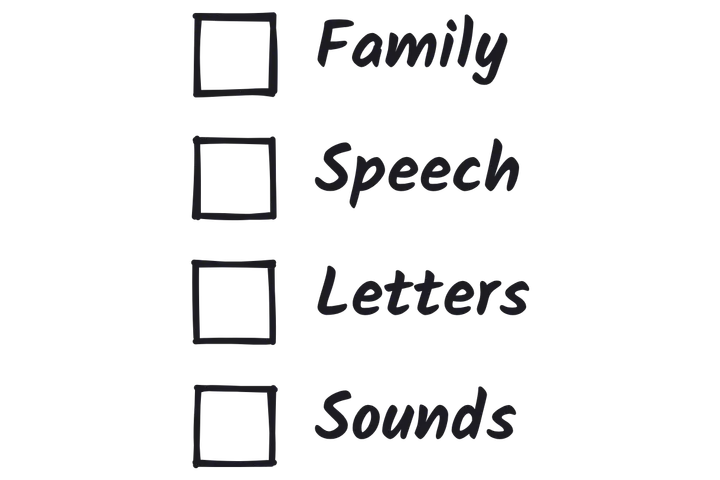
The early signs: dyslexia in the family, slow early speech, and trouble with letters and the sounds in words.
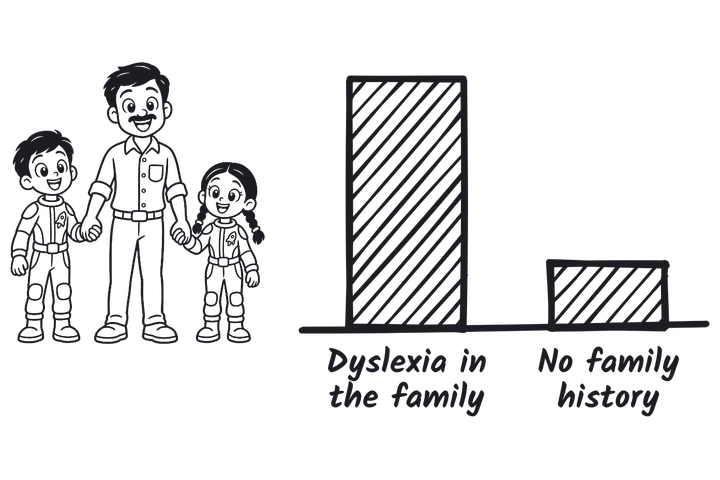
In 21 studies, about 45 percent of children with dyslexia in the family went on to have it. More than half did not.
So no one sign is proof. Even the best early checks flag some children who turn out fine.
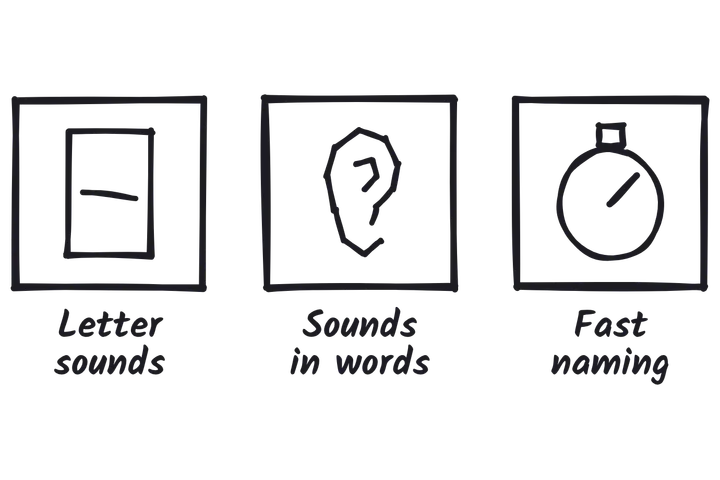
The best checks look at three skills: letter sounds, hearing the sounds in words, and naming things fast.
Researchers say to raise family history and speech worries at doctor visits and school enrollment. And help should not wait for a diagnosis.
So if the signs show up, you'll know what to ask.
The 30-second answer
8 cards. Tap the arrow for the next one.
The short answer
Dyslexia in the family, slow early speech, and trouble with letters and the sounds in words. No one sign is proof.
Does dyslexia run in families?
Yes. About 45% of children with a parent or sibling with dyslexia went on to have it. More than half did not.
Is late talking a sign?
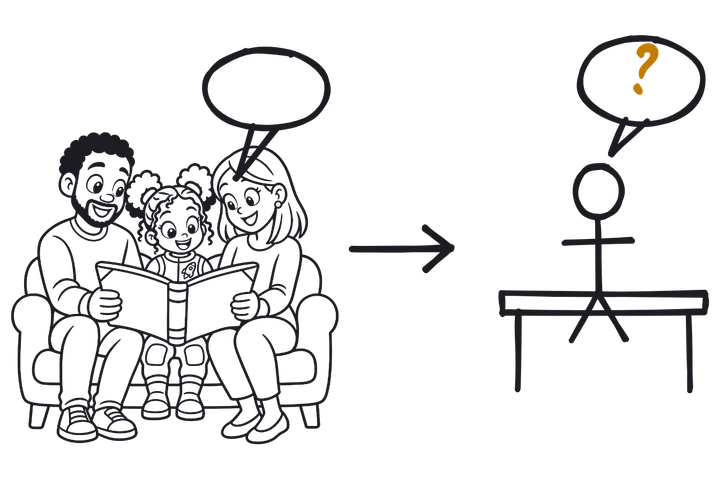
On its own, a weak one. Most late talkers who understand well learn to read well. Language trouble that lasts to school entry is a stronger sign.
What do the best checks look at?
Three skills: knowing letter sounds, hearing the sounds in words, and naming things fast.
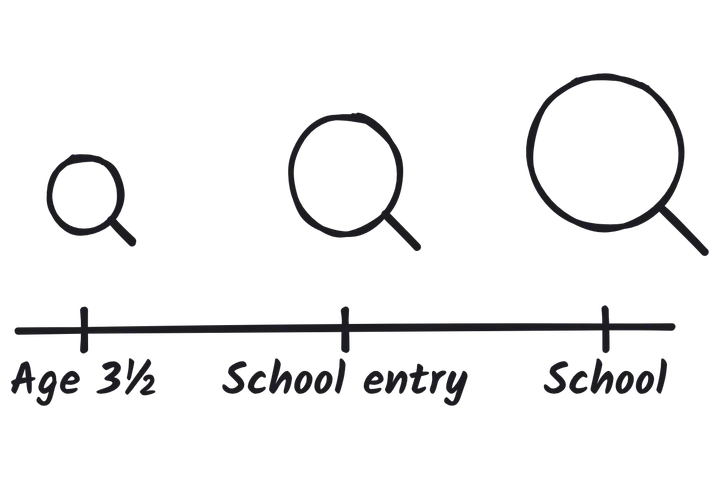
How early can you tell?
Risk can show from age 3½. Checks get more accurate close to school entry. Dyslexia itself cannot be diagnosed before school.
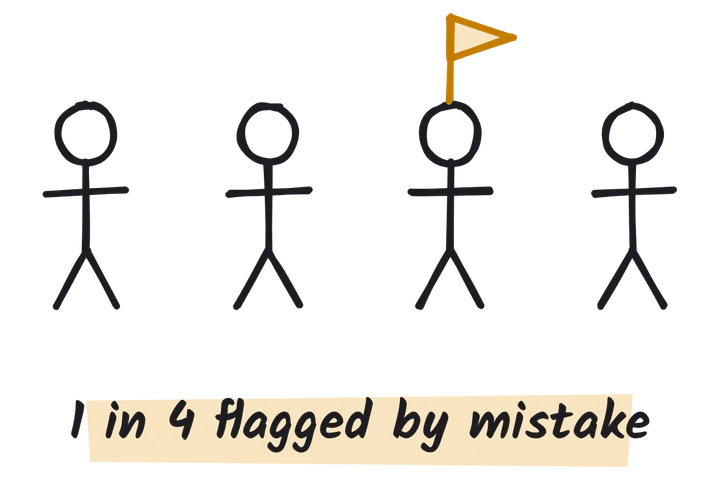
Can the checks be wrong?
Yes. At age 6 to 7, the best check still flagged about 1 in 4 of the children who did not go on to have dyslexia.
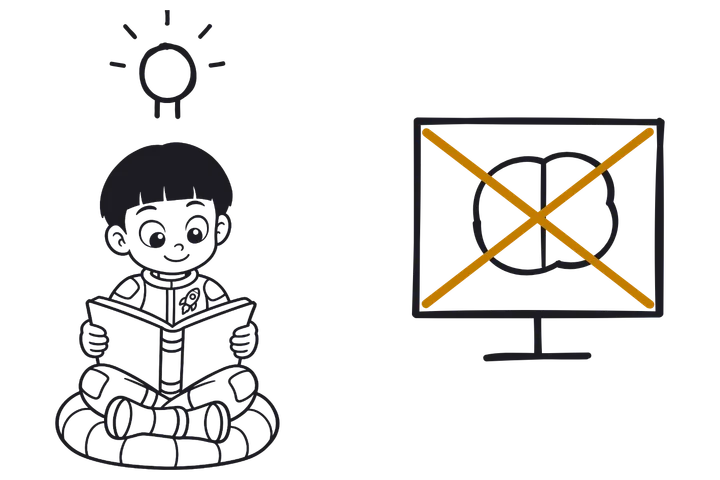
Is it about being smart?
No. Dyslexia occurs across the whole range of intelligence. And no brain scan can diagnose it.
What the sources say to do
Raise family history and speech worries at doctor visits and at school enrollment. Help should not wait for a diagnosis.
The studies behind this answer
5 studies at a glance. Tap one for its Study Facts.
- Snowling and Melby-Lervåg, 2016Pooled review of 21 studiesAbout 45% of children with dyslexia in the family went on to have it, against about 12% of others. More than half did not.Moderate
- Thompson and others, 2015One study that followed 260 childrenFamily history predicted from age 3½. By 6 to 7, three skills told most. Early checks flagged many children by mistake.Moderate
- Colenbrander and others, 2018Expert reviewNo single sign reliably predicts reading trouble. Signs are warnings to monitor a child.Expert view
- Ozernov-Palchik and Gaab, 2016Expert reviewFamily history, letter sounds, sound awareness and naming speed are the main early signs. Brain scans are not a test yet.Expert view
- Catts and others, 2026Expert statement: the 2025 definitionLasting trouble reading or spelling words, even with good teaching. No other sign can confirm it or rule it out.Expert view
Evidence: Strong many fair tests agree · Moderate good but not settled · Limited few or weak tests · Expert view experts reading other research, no new test
What is dyslexia?
Dyslexia is lasting trouble with reading or spelling words. The words come out wrong, or slowly, or both. The trouble stays even with teaching that works for other children. That is the core of a definition from 2025. The International Dyslexia Association approved it.
It is not about being smart. It occurs at every level of intelligence, the paper behind that definition notes.
It has no sharp edge. Experts have no agreed line where dyslexia begins.
It cannot be diagnosed before a child starts school. But the risk can be seen much earlier, the same paper says.
Early signs of dyslexia: what the studies found
Dyslexia in the family is one of the strongest signs. A 2016 review pooled 21 studies of children who had a parent or sibling with dyslexia. About 45% of them went on to have dyslexia. Among children with no family history, about 12% did. So more than half of the children with dyslexia in the family did not go on to have it. The 45% also depends on where each study drew the line.
Signs of dyslexia in toddlers and preschoolers
- Slow early speech and language. Children at family risk who later had dyslexia were slower with speech sounds, words and grammar.
- Late talking alone is a weak sign. Most late talkers who understand well go on to read well, a second 2016 review notes.
- Trouble learning letters. One study followed 260 children from age 3½ to 8. At 3½, two things predicted dyslexia: family history and letter knowledge.
- Trouble repeating made-up words. In preschool, this skill was particularly poor, the 21-study review found.
Signs of dyslexia in kindergarten and first grade
- Weak letter-sound knowledge.
- Trouble hearing the sounds in words. A second 2016 review gives two examples. Do two words rhyme? Can the child blend sounds into a word?
- Slow naming. The child is slow to name rows of colors, objects or numbers.
- Language trouble that is still there at school entry. These children are at high risk, the 260-child study found.
The first three make a good screening set in early primary school, the same study concludes.
No one sign is proof. "There is no single risk factor which is reliably associated" with later reading trouble, a 2018 review states. Signs showed up even in children with dyslexia in the family who became normal readers.
Early checks are wrong for many children. In the 260-child study, the best check at age 6 to 7 caught about 9 in 10 of the children who went on to have dyslexia. It also flagged about 1 in 4 of those who did not. At age 3½, it flagged more than half of those who did not.
What the studies did not find. Preschoolers at family risk did not see or move differently, the 21-study review found. It calls that evidence extremely limited. IQ cannot reliably show who is at risk, two brain researchers write. Brain scans are not a test yet, they add.
Some things protect. Children at family risk who became normal readers tended to have stronger language, mainly vocabulary. They also named things at normal speed.
Dyslexia test and screening: what to do if you see the signs
A sign is a reason to watch and to ask. It is not a diagnosis. Here is what the sources say:
- Raise it early. Doctor visits and school enrollment are good times to bring up family history and worries about speech, the definition paper says.
- Ask what the school checks. In kindergarten, checks of letter knowledge and sound awareness are fitting, the 2018 review says. In the next two years: reading simple made-up words and common words.
- Expect a second look. A first check can be wrong. Wrong alarms can be sorted out by follow-up testing and by watching how a child responds to teaching.
- Do not wait for a label. Any child whose word reading lags should get help, the 2018 reviewers argue. Dyslexia is usually diagnosed in second grade or later, a 2016 review notes. That is after the time when help works best.
- Keep books in the home. A home rich in books and reading together is linked to a good start, the 260-child study notes.
This page is not medical advice. Only a qualified professional can diagnose dyslexia.
Know a parent or teacher who is asking about this?
Go deeper
The background, section by section. Tap a section to open it.
1What causes dyslexia?
Not one thing. Genes, the brain and the child's world all play a part, the 2025 definition states.
Genes raise the odds. They do not decide. If one identical twin has dyslexia, the other does too in up to 68% of cases, one review reports.
Teaching matters. Poor teaching can make the trouble worse. Good teaching can ease it, the definition paper says.
2Why this matters to you
Help works best early. But dyslexia is most often diagnosed after that time has passed. Two researchers call this the "dyslexia paradox".
Six studies gave at-risk beginning readers a lot of extra teaching. After it, 56% to 92% of them read in the average range.
There is a caution. The 21-study review looked at early help for children with dyslexia in the family. Later reading tests were "not very encouraging", it says. Help that works for these children is still "awaited".
3How the studies were done
Which studies we used
- 2016: a pooled review of 21 studies of children with dyslexia in the family.
- 2015: one study of 260 children, from age 3½ to 8.
- 2018: an expert review of how to find reading trouble early.
- 2016: an expert review of early signs.
- 2026: the paper behind the 2025 definition of dyslexia.
We did not read a study of letter reversals. No paper here lists them.
What was measured
Early speech. Knowing letters. Hearing the sounds in words. Naming speed. Later: word reading and spelling.
Who was measured
Children with a parent or sibling with dyslexia, and children with none. The 260-child study also took in children with early language trouble. Most families were white British and better off than average.
How it was measured
The children were found before they could read. Then they were tested over the years. These are not experiments.
The 21-study review lists limits. Samples were often small. Parents chose to join. Other conditions were not checked for.
Who did the studies, and who paid
The label of each study, at the top of this page, shows who did it.
4For teachers
Use more than one check. Several checks together tell more than one, the 2018 review says.
Naming speed predicts reading. But training it has not improved reading, the same review reports.
Keep monitoring. Early finding "should be the first step in an ongoing cycle", its authors conclude.
5Questions parents and teachers ask
How do I know if my child is dyslexic?
Signs alone cannot tell you. A diagnosis rests on lasting trouble with word reading or spelling, and comes from a professional.
What are 5 signs of dyslexia?
The studies here point to five: dyslexia in the family, slow early language, trouble learning letters, trouble hearing the sounds in words, and slow naming.
At what age can dyslexia be diagnosed?
Not before school entry, the definition paper says. Lasting trouble can show as early as the first year of teaching.
Is reversing letters a sign of dyslexia?
None of the five papers we read lists reversed letters among the early signs. The signs they found are in speech, letters and sounds.
Is dyslexia genetic?
In part. It runs in families. But genes raise the odds; they do not decide.
How common is dyslexia?
It depends on where the line is drawn. Estimates run from about 5% of children to as many as one in five.
SSources and the exact numbers
- Margaret J. Snowling and Monica Melby-Lervåg, “Oral Language Deficits in Familial Dyslexia: A Meta-Analysis and Review”, Psychological Bulletin 142(5), 2016, pp. 498–545.Free on PubMed Central; DOI 10.1037/bul0000037. For researchers: 21 independent samples, 95 publications; prevalence in family-risk samples 45% (95% CI 39% to 51.2%; 15 studies, 420 children with dyslexia); in comparison samples 11.6% (95% CI 8.4% to 15.8%; 11 studies); 53% where the cut-off was above the 10th percentile, 33.7% where it was below.
- Paul A. Thompson and others, “Developmental dyslexia: predicting individual risk”, Journal of Child Psychology and Psychiatry 56(9), 2015, pp. 976–987.Free on PubMed Central; DOI 10.1111/jcpp.12412. For researchers: 260 children; 47 classed as dyslexic at age 8 and 172 not (219 with complete data); at 6 to 7 years the best model: 89.4% sensitivity, 76.4% specificity, area under the curve .910; at 3½ years: 90.2% sensitivity, 43% specificity, area under the curve .707.
- Danielle Colenbrander, Jessie Ricketts and Helen L. Breadmore, “Early Identification of Dyslexia: Understanding the Issues”, Language, Speech, and Hearing Services in Schools 49, 2018, pp. 817–828.Free accepted manuscript, University of Bristol; DOI 10.1044/2018_LSHSS-DYSLC-18-0007. No pooled numbers; it reports 40 to 66% for children with an affected first-degree relative against 6 to 14% for others (“reading difficulties”, several studies).
- Ola Ozernov-Palchik and Nadine Gaab, “Tackling the ‘dyslexia paradox’: reading brain and behavior for early markers of developmental dyslexia”, WIREs Cognitive Science 7(2), 2016, pp. 156–176.Free author manuscript on PubMed Central; DOI 10.1002/wcs.1383. No pooled numbers; 56 to 92% of at-risk beginning readers reached the average range across six intervention studies; up to 68% of identical twins.
- Hugh W. Catts, Charles W. Haynes and R. Malatesha Joshi, “Defining dyslexia: 2025 revision”, Annals of Dyslexia 76, 2026, pp. 409–437.Free (open access, CC BY-NC-ND); DOI 10.1007/s11881-026-00363-4. The International Dyslexia Association's 2025 definition; no numbers of its own.
iWho wrote this, and how Sonoverse fits in
The Sonoverse team, Future Gen Press LLC. Sonoverse builds decodable books, guided phonics lessons and reading checks for children aged five to seven, sequenced to UFLI Foundations and IMSE Orton-Gillingham. The team reads the primary research behind the Science of Reading so parents and teachers don't have to start from scratch.
Sonoverse was not part of any study here. It teaches letter sounds in a planned order. A guide named Bolt says each sound and shows each step.
Find your child's starting point with the free word check. The word check is not a dyslexia test.
Expert review outstanding. A separate checker compared each fact on this page with the paper it comes from. This page is not medical advice. Last reviewed November 17, 2026.